
Last updated November 25, 2026
 Whole-home duct cleaning
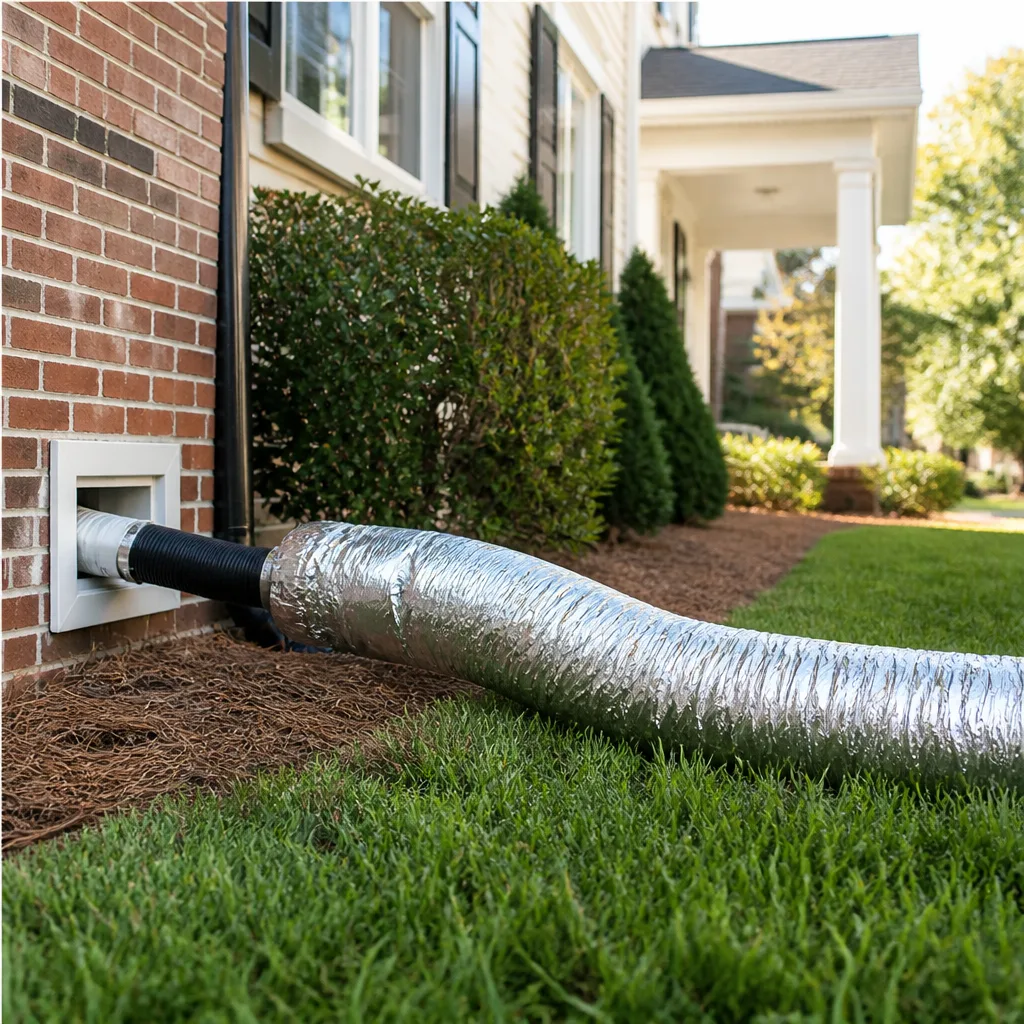
 Dryer vent cleaning
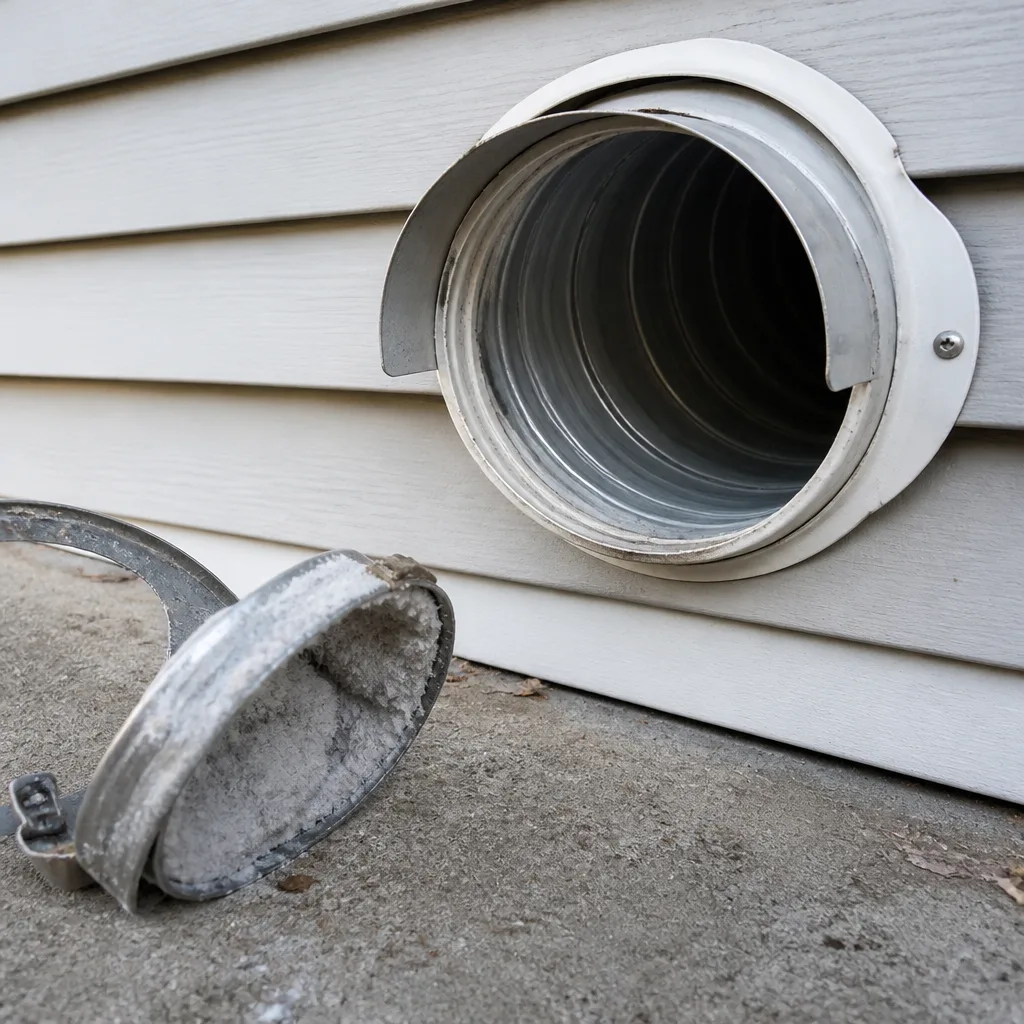
 Camera inspection
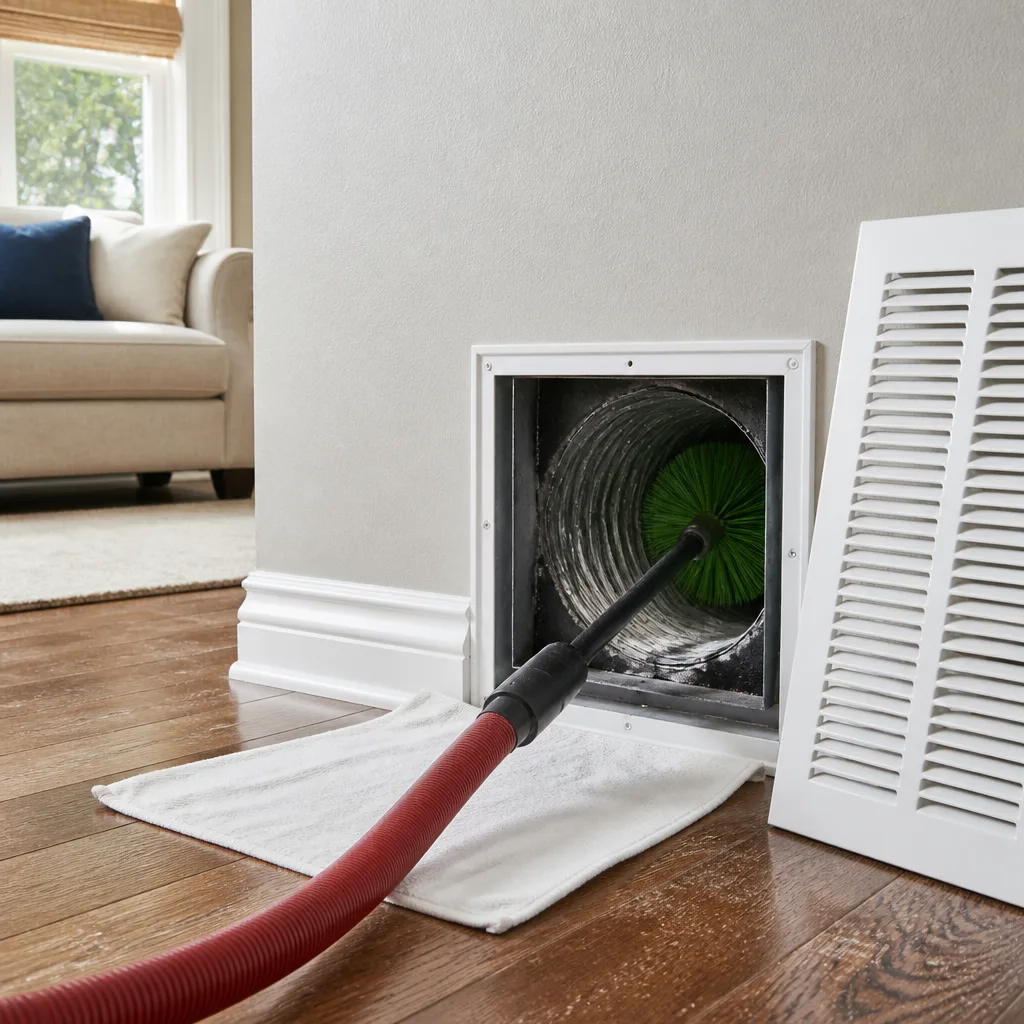 Sanitizing & deodorizing
Whole-system duct and dryer vent check with before-and-after photos - you see exactly what came out of your vents
That "$99 whole-house special" is a bait ad - the real number appears once they are in your hallway, or the "clean" is a shop-vac at the register. We photograph the inside of your ducts before and after instead.
Air Duct Cleaning Permits, Codes & Inspections in Sandy, UT: What You Need to Know
No permit is required to clean your air ducts in Sandy. That part is simple. The confusion starts after the cleaning quote, when a three-part upsell appears: “we’ll seal your leaky ducts,” “we’ll swap that crushed flex run,” “we’ll service the blower while we’re in there.” Each of those jobs is mechanical work on your HVAC system, not cleaning, and in Utah they fall under contractor licensing rules that a cleaning-only company may not be legally able to perform. A technician without the right license doing that work can also put your equipment warranty at risk. This guide walks through the Utah DOPL requirements, the exact scope line between cleaning and mechanical work, when Sandy City wants a permit, how HOA rules in Traverse Ridge and South Mountain layer on top, and what to ask for in writing before anyone touches more than dust. If you’d rather just get a straight answer on your own home, call (833) 858-9278. We answer 24/7.
Quick Answer
Air duct cleaning itself does not require a permit in Sandy, UT, and no state license is required to perform it. But duct sealing that changes the system, register replacement, flex duct replacement, and any work that opens or services HVAC equipment fall under Utah Division of Occupational and Professional Licensing (DOPL) rules for licensed HVAC contractors. Ask for the license in writing before that work starts, and check with Sandy City’s building department if the job involves altering duct runs or equipment connections.
Styles & brands we work with
- Whole-home duct cleaning
- Dryer vent cleaning
- Camera inspection
- Sanitizing & deodorizing
Table of Contents
- What Does Utah DOPL Require of an Air Duct Cleaning Company?
- Cleaning vs. Mechanical Work: Where Is the Line?
- When Does Sandy City Require a Permit for Duct Work?
- HOA Rules in Traverse Ridge and South Mountain
- Older Homes in the Draper-Sandy Corridor
- What Happens During a Duct Inspection?
- What to Ask For in Writing Before Work Starts
- How Sandy’s Climate and Geography Affect Duct Condition
What Does Utah DOPL Require of an Air Duct Cleaning Company?
Utah’s Division of Occupational and Professional Licensing (DOPL) regulates contractors who perform work on HVAC systems. Air duct cleaning, as a standalone service that removes debris from duct interiors, does not fall under a DOPL license category. What that means in practice: a cleaning company can legally set up a negative-pressure vacuum, run a Rotobrush whip through a trunk line, brush and sanitize the runs, and pull the debris out, without holding an HVAC contractor license.
The moment the work changes the system rather than cleaning it, the picture changes. Under Utah contractor licensing rules, the following tasks are generally considered HVAC contractor work:
- Sealing duct joints in a way that changes system pressure or airflow balance
- Replacing sections of flex duct or rigid duct
- Removing or installing registers, grilles, or return-air boots in new locations
- Opening the air handler cabinet, servicing the blower, coil, or plenum
- Modifying the equipment connection at the furnace or AC
An air duct cleaning company that holds no HVAC contractor license can clean ducts and can identify problems. It cannot legally perform the mechanical fixes. That distinction is what “full-system” actually means in practice: a genuine full-service company will either hold the licensing itself or connect you with a licensed HVAC contractor before the work goes beyond cleaning.
Our technicians have up to 15 years of experience reading duct systems, and we know the difference in the field. If the right answer is “this needs a licensed HVAC contractor,” we say so before any tool comes out of the van. Estimates are free. Call (833) 858-9278. We answer 24/7. Fast dispatch from 7am to 7pm, Sunday through Friday.
What an unlicensed upsell actually risks
Equipment manufacturers set warranty terms. When a non-licensed technician opens the air handler, re-seals a plenum, or swaps a run in a way that leads to a compressor fault or a blower failure, the manufacturer can decline the warranty claim on the grounds that the system was serviced outside its specifications. That is the practical cost of an unlicensed tech doing “while we’re here” work. It’s not a scare tactic. It’s how warranties are structured. Ask for the license number in writing, and put it beside the equipment serial numbers in your file.
Cleaning vs. Mechanical Work: Where Is the Line?
The scope boundary between cleaning and mechanical work is the single most misunderstood part of this industry. Homeowners hear “we’ll seal your leaks and it’ll improve efficiency” and assume it’s part of the cleaning. It isn’t. Those are two different trades in Utah, and the one that actually helps you needs to be lined up correctly.
Here’s how the split works on a typical job:
- Inside the duct runs. Brushing, HEPA vacuuming, sanitizing, and removing debris from inside duct interiors. This is cleaning work and does not require an HVAC contractor license.
- At the access panels and register openings. Removing and reinstalling registers for access. Cleaning work. Replacing a register with a different size, adding a new register, or relocating a boot. This crosses into mechanical work.
- At the duct joints and seams. Identifying leaks with a smoke test or pressure test is inspection. Applying mastic or sealant to close leaks on a system can be mechanical work depending on scope and method, and should be done by a licensed HVAC contractor when it changes pressure balance.
- Inside the air handler cabinet. Cleaning the blower wheel, evaporator coil, and drain pan is part of HVAC cleaning. It’s also the point where the equipment is opened. In Utah, this is the clearest boundary: this is HVAC contractor work.
- At the equipment connection. Anything that disconnects, reconnects, or modifies the pathway from duct to equipment is licensed HVAC contractor work.
In our experience across Sandy, the confusion is highest right after a cleaning when the tech finds a crushed flex run in the attic or a gap at the plenum. Both are real problems. Both need fixing. The right protocol is: note them on the inspection report, quote the cleaning separately, and refer the mechanical fix to a licensed HVAC contractor. We repair what we find when the licensing is in place. When it isn’t, we point you to the person who can do it legally.
For a full picture of what a cleaning visit actually covers, see our air duct cleaning page.
When Does Sandy City Require a Permit for Duct Work?
Sandy City follows the Utah uniform building code process through its own building department. Duct cleaning alone never triggers a permit. Duct work that alters the mechanical system can. The general rule: routine maintenance and cleaning do not require a permit; changes to the system’s design do.
Permits are typically in play for:
- Adding a new supply or return run, or extending an existing one
- Relocating a register or grille to a different wall or floor location
- Replacing an air handler, furnace, or AC unit
- Modifying the plenum or equipment connections
- Installing a new ventilation fan or HRV/ERV system
- Altering duct sizing in a way that changes airflow to a room or zone
Permits are usually not required for:
- Cleaning duct interiors
- Replacing a register with the same size register
- Sealing small leaks with approved methods under a licensed HVAC contractor’s scope
- Sanitizing or fogging ducts
If you’re unsure how Sandy City classifies a specific task, call the building department before scheduling the work. Ask the question in writing if it’s a bigger job: “Do I need a mechanical permit for sealing the plenum at my furnace?” The city will tell you. Getting it wrong means the work may not pass a future home inspection or appraisal, and that can complicate a sale down the line.
The inspection trigger homeowners miss
A cleaning visit often turns into a report of flex duct that has separated at a collar, or a boot seal that has failed into the attic space. If you hire a contractor to reconnect and re-seal those runs, that is duct work, and depending on scope Sandy City may want a permit pulled. Ask the contractor, in writing, whether they are pulling a permit and who is responsible for the inspection. If the answer is “not needed,” ask why not. A licensed HVAC contractor can answer that question accurately. A cleaning-only crew cannot.
HOA Rules in Traverse Ridge and South Mountain
Sandy’s master-planned communities layer a second set of rules on top of city code. In subdivisions like Traverse Ridge and South Mountain, the HOA architectural review committee can require paperwork before, during, or after any work that alters the exterior or affects shared mechanical systems.
Three HOA issues come up most often:
- Exterior vent and dryer vent terminations. If a cleaning or repair job involves replacing a dryer vent cap, moving an exhaust termination, or installing a new exterior vent hood, the HOA architectural review committee often requires approval first. Colors, styles, and locations are frequently specified.
- Roof or attic access. Some Traverse Ridge homes have duct runs through unconditioned attic space, and HOA rules can specify that contractors must be licensed and insured to access the roof or attic for any reason. Get the contractor’s insurance certificate in your file before the visit.
- Common wall or shared mechanical issues. In attached housing, duct and vent work affecting a shared wall or shared exterior termination may need neighbor notification or HOA sign-off. Read your CC&Rs before scheduling.
The takeaway: HOA rules don’t change the Utah DOPL requirements or the Sandy City building permit rules. They layer on top. A duct cleaning job that needs no permit can still need HOA sign-off if it touches an exterior termination or shared mechanical element. If you’re not sure, ask your HOA manager before the work is scheduled. It’s easier than asking for forgiveness after a vent cap has been installed in the wrong color.
Older Homes in the Draper-Sandy Corridor
The Draper-Sandy corridor includes neighborhoods with housing stock from many different decades, and duct condition tracks with that. Homes built in earlier decades often have duct systems configured for equipment that has since been replaced, and the connections at the equipment often don’t match the current unit. Duct transitions running through unconditioned attic space in parts of Sandy see significant swings between summer and winter, and duct tape applied decades ago has often lost its adhesion.
What that means for permits and inspections:
- A cleaning visit to an older Sandy home often surfaces flex duct that has slipped off a collar or a plenum seal that has failed. Those findings are common, not alarming.
- When the fix is mechanical, meaning re-securing the run changes system pressure balance, it needs a licensed HVAC contractor. When the fix is a same-size reconnection with duct sealant within the current scope, it may be within a cleaning and repair company’s allowed work. Ask explicitly.
- Modifications like adding a run to serve a new addition almost always need a Sandy City permit. Older homes are more likely to already have mismatched duct sizing and unbalanced rooms, so the modification needs to be engineered, not guessed at.
- Register replacement in older homes frequently reveals undersized boots or gaps around the duct opening. Replacing a boot with a larger one is mechanical work. Replacing the same-size register is not.
Older homes also hide ducts behind finished walls and ceilings, which makes inspection discovery more complicated. A professional inspection with before-and-after photos inside the ducts is worth the modest additional cost in these homes. You want to see what’s actually there before you talk about fixes. Our HVAC cleaning service includes the equipment-side inspection, so you get one report covering the whole airflow chain rather than two contractors handing off problems to each other.
What Happens During a Duct Inspection?
An inspection is the diagnostic step before cleaning and before any conversation about repairs. It’s the part of the process that answers the questions the cleaning alone can’t. Here’s how a typical inspection goes:
- Walkthrough and airflow check. We note which rooms feel weak, which feel overpowered, and where register airflow is uneven. That’s mapped to the duct layout before anything is opened.
- Access panel or register removal. Registers are lifted or access panels opened so a camera or brush can reach the duct interior.
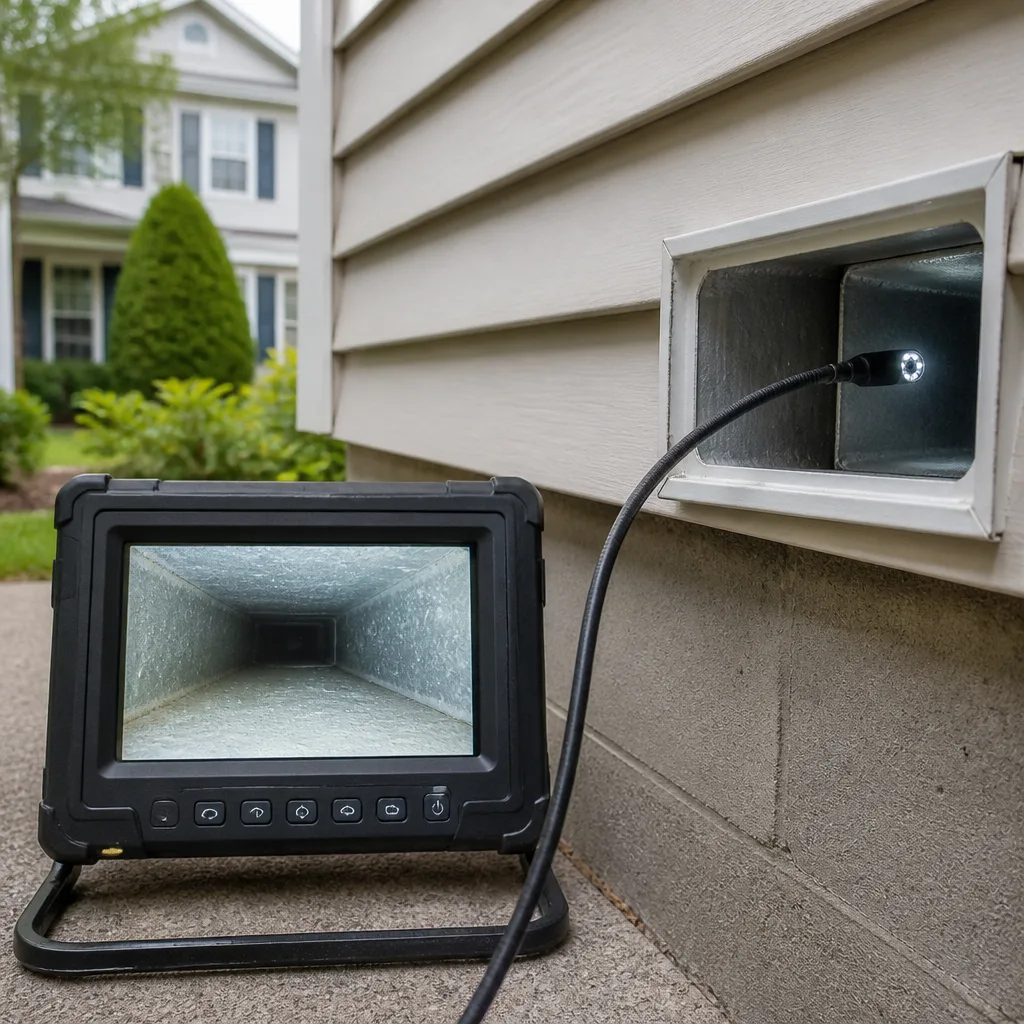
- Camera inspection. A duct camera runs the trunk and the main branch runs, showing whether the debris is a light dust film, heavier buildup, or actual obstruction. We photograph what we find.
- Leak and connection check. Joints, seams, plenums, and equipment connections are checked for separation or failed tape. This is the point where a cleaning-only provider should stop and refer.
- Air handler observation. The blower, coil, and drain pan are visually checked. Full cleaning of these components is HVAC contractor work, and it should be quoted separately with the licensing confirmed.
- Written report. Findings go on paper with photos, with each item marked as cleaning work, licensed HVAC work, or possible permit required.
That written report is what you need before you agree to any work beyond cleaning. It tells you what’s cleaning, what’s repair, and what’s mechanical work that needs a licensed contractor. If you request an estimate and a contractor won’t put the scope on paper with those categories, that’s a signal. The industry’s bait-and-switch reputation comes from quotes that balloon once the tech is on site. A written, categorized report prevents that.
What to Ask For in Writing Before Work Starts
The questions below apply to any duct work beyond straight cleaning. Ask them before the visit, get the answers in writing, and keep the file.
- License number and type. If the contractor will do any HVAC system work (opening the air handler, re-sealing plenums, replacing runs), ask for the DOPL license number in writing. If it’s a cleaning-only company, ask them to confirm in writing that they will not perform licensed HVAC work.
- Liability coverage. Ask for a certificate of insurance naming the coverage amounts. This applies to any contractor working in your home.
- Written scope. A one-page scope that separates cleaning work from mechanical work. The cleaning portion is quoted at a flat price per system. The mechanical portion is quoted separately.
- Permit handling. For any job that involves duct modification, ask who is pulling the permit and who is responsible for the inspection. If no permit is being pulled, ask them to state in writing why not.
- Before-and-after photos. Ask for photos of your own ducts before and after the cleaning. Any contractor unwilling to photograph their own work is one to walk away from.
- Sanitizing product documentation. If you are being offered sanitizing, ask for the product data sheet and the application protocol. We use Guardsman-backed sanitizing protocols on our air quality and sanitizing service, and the documentation is available to any customer who asks.
For a free estimate on a cleaning-only or full-system job in Sandy, call (833) 858-9278. We answer 24/7. Fast dispatch from 7am to 7pm, Sunday through Friday. The estimate is free, and the written price is what you pay.
How Sandy’s Climate and Geography Affect Duct Condition
Sandy sits in the Salt Lake Valley at the base of the Wasatch, and the climate drives duct condition more than most homeowners realize. Winter inversions trap particulate in the valley air for extended stretches, and homes running their furnaces continuously pull that particulate through the return side of the system. Ducts that see heavy furnace runtime collect dust faster than the national average. That doesn’t mean every Sandy home needs annual cleaning. It means interior duct condition varies widely by neighborhood, by furnace runtime, and by whether the home has filtration upgrades.
Two Sandy-specific factors to consider:
- Inversion season. Winter furnace runtime in Sandy runs long, and interior dust accumulation tracks with it. Homes with pets and family members with allergies often notice duct condition most in the furnace season. A cleaning before the heating season starts is one way to reduce the dust load coming out of the registers.
- Dry summer air and attic duct runs. Sandy’s low-humidity summers are tough on duct sealants and adhesive tape in unconditioned attic runs. A duct run that held a seal through the winter can open up through a summer of expansion and contraction. Visual inspection of attic duct runs, especially in older homes, is worth scheduling before heating season.
None of this is a permit issue. It’s the reason duct cleaning in Sandy is worth thinking about on a schedule, not a crisis. Neighborhoods up against the foothills, from Sandy east into Draper, get the same inversion load. Getting the timing right matters more than getting the job done twice as often.
Honeywell and Aprilaire filtration upgrades, both of which we work with, are one of the more useful follow-ons to a cleaning in Sandy homes. Filter upgrades change how often a system needs cleaning by trapping fine particulate before it reaches the duct interior. If you’re scheduling a cleaning, ask whether filtration is a sensible add-on. We’ll tell you honestly if it’s not. And our dryer vent cleaning service is worth bundling into the same visit if the home is an older one, since lint accumulation follows the same seasonal logic and is a separate fire-risk concern from duct dust.
Common Mistakes to Avoid
- Assuming all “full-service” duct companies can legally do the repairs they quote. Cleaning is licensed differently from mechanical work in Utah. Ask for the license number before any HVAC-system work. If the answer is vague, treat it as a “no.”
- Letting a cleaning company perform duct sealing without confirming HVAC licensing. Sealing changes pressure balance, and that’s licensed work. An unlicensed seal can be worse for your system than no seal at all.
- Skipping the Sandy City building department question on duct modifications. A new run, a relocated register, or a plenum change may need a permit. If your contractor says it doesn’t and you’re unsure, call the city and ask the question yourself.
- Overlooking HOA approval in Traverse Ridge or South Mountain before an exterior vent change. Architectural review committees in Sandy’s master-planned communities frequently require sign-off on exterior work. Get it in writing before the work is scheduled.
- Accepting a phone quote without a written scope. The industry’s bait-and-switch reputation comes from quotes that balloon once the tech is on site. A one-page written scope, with cleaning and mechanical work separated, prevents that entirely.
- Believing a “same size register” replacement equals mechanical work. Same-size register swaps are typically cleaning-scope. Register upgrades, relocations, or new boots are mechanical work. Know which one you’re buying.
- Skipping the before-and-after photo request. Any duct cleaner unwilling to photograph your own ducts before and after is not documenting the work. Ask for photos in writing as part of the scope.
- Assuming annual cleaning is necessary. Duct cleaning frequency depends on pets, filtration, occupancy, and furnace runtime. A good contractor will tell you when the home doesn’t need it yet.
See the difference
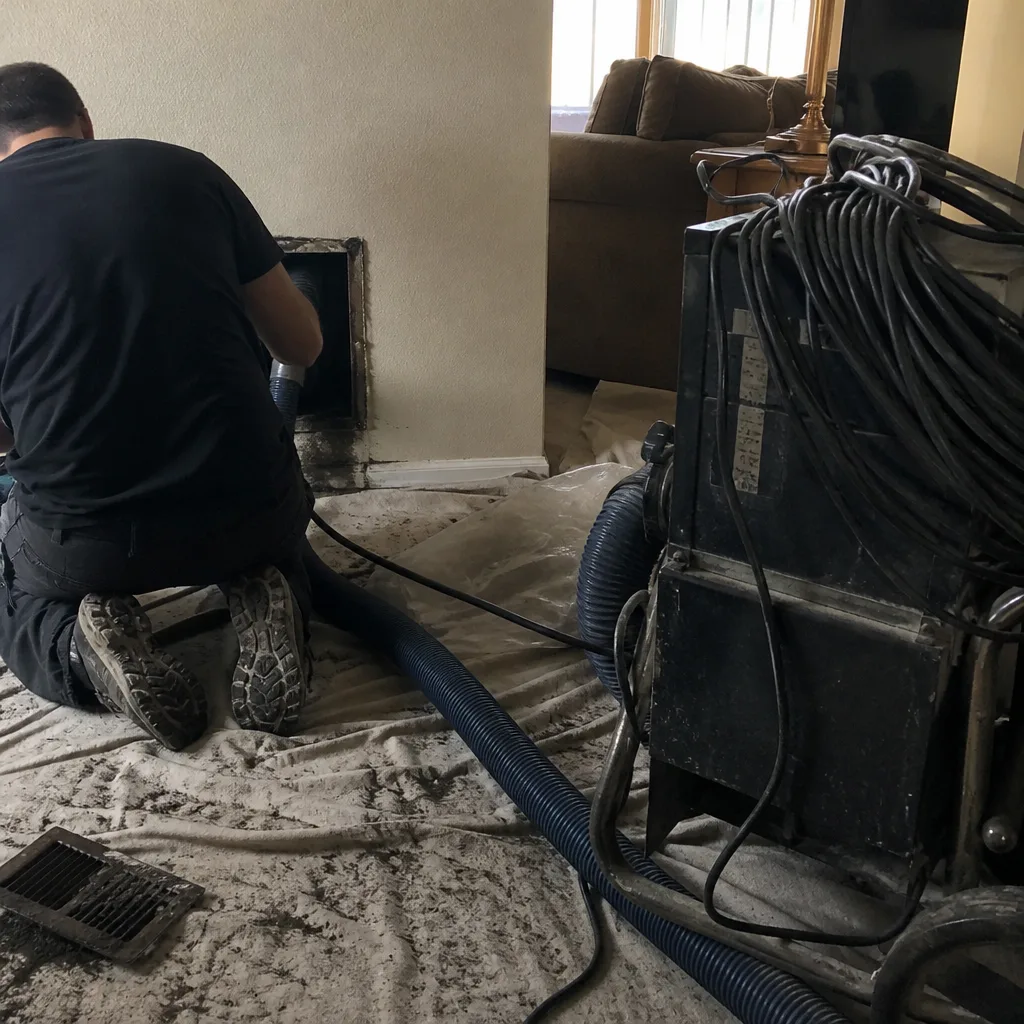 Before
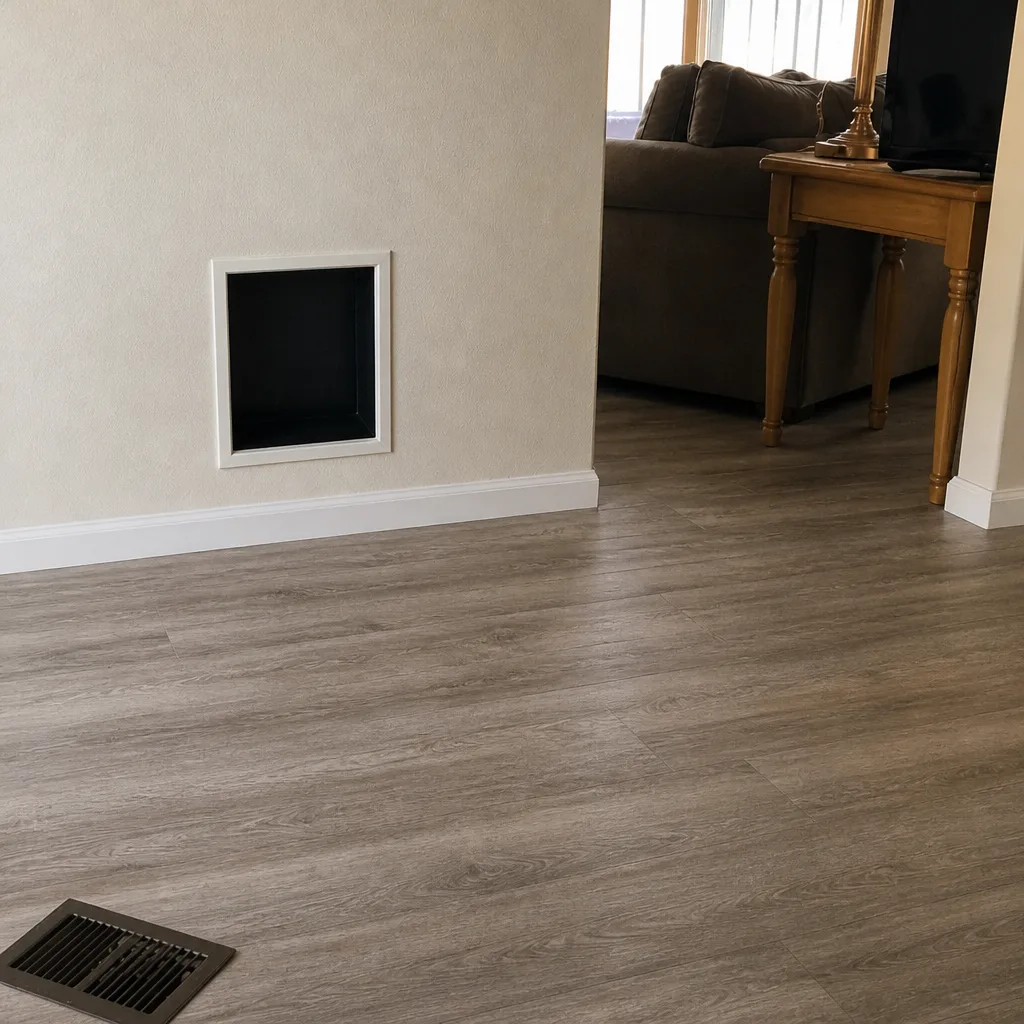 After
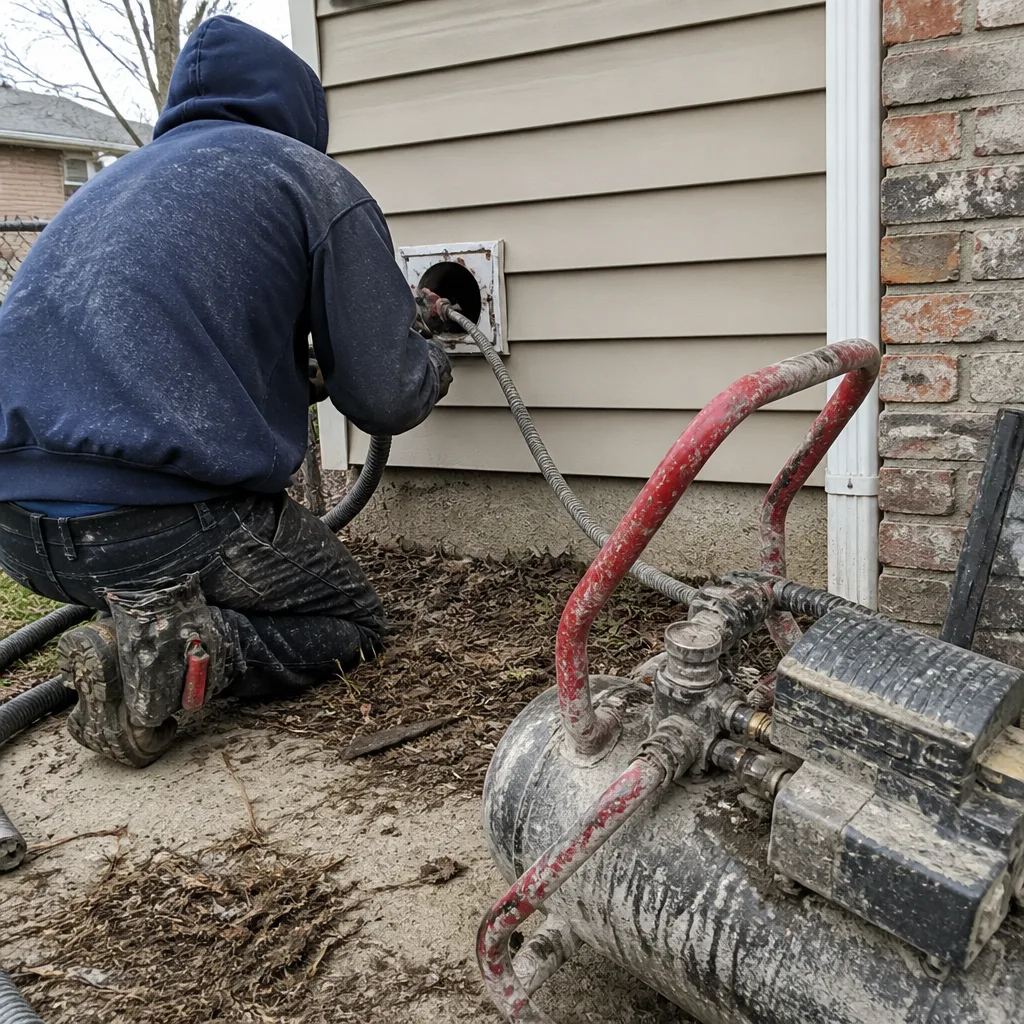 Before
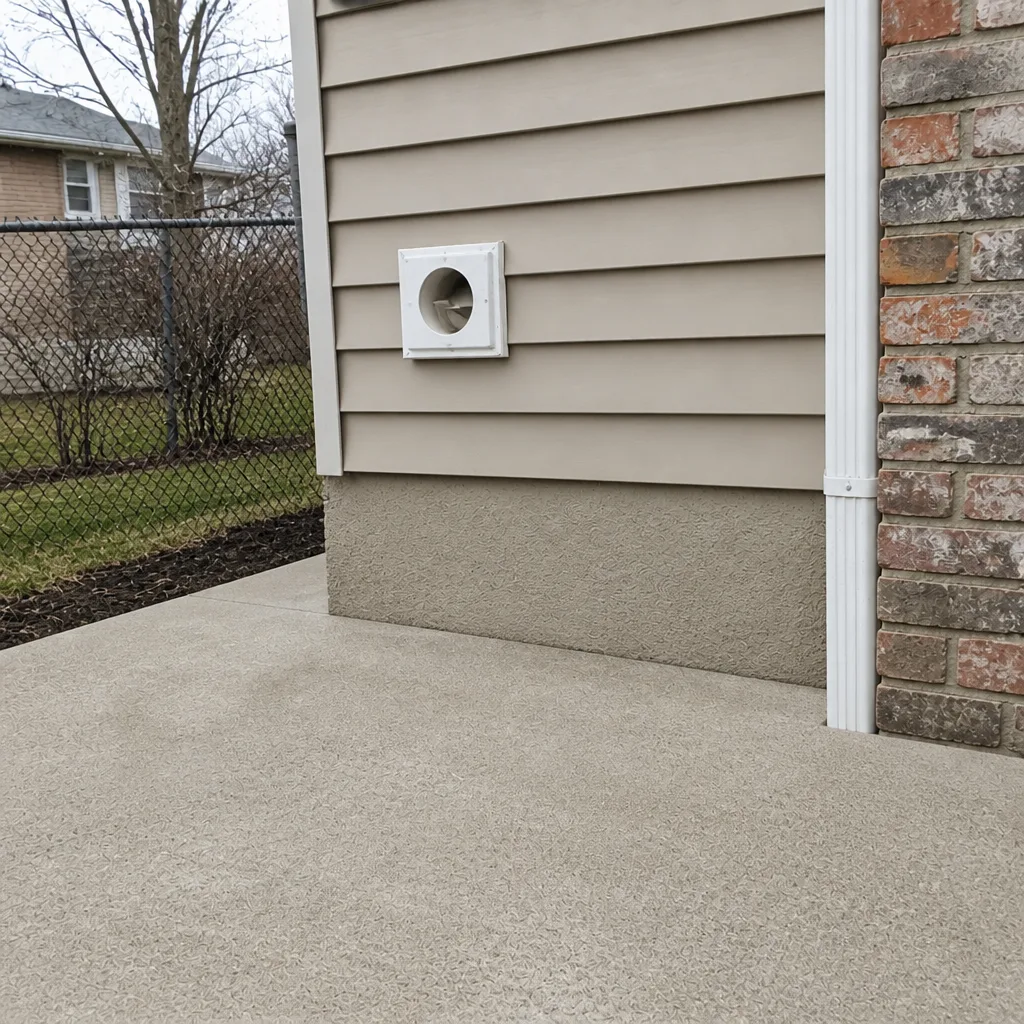 After
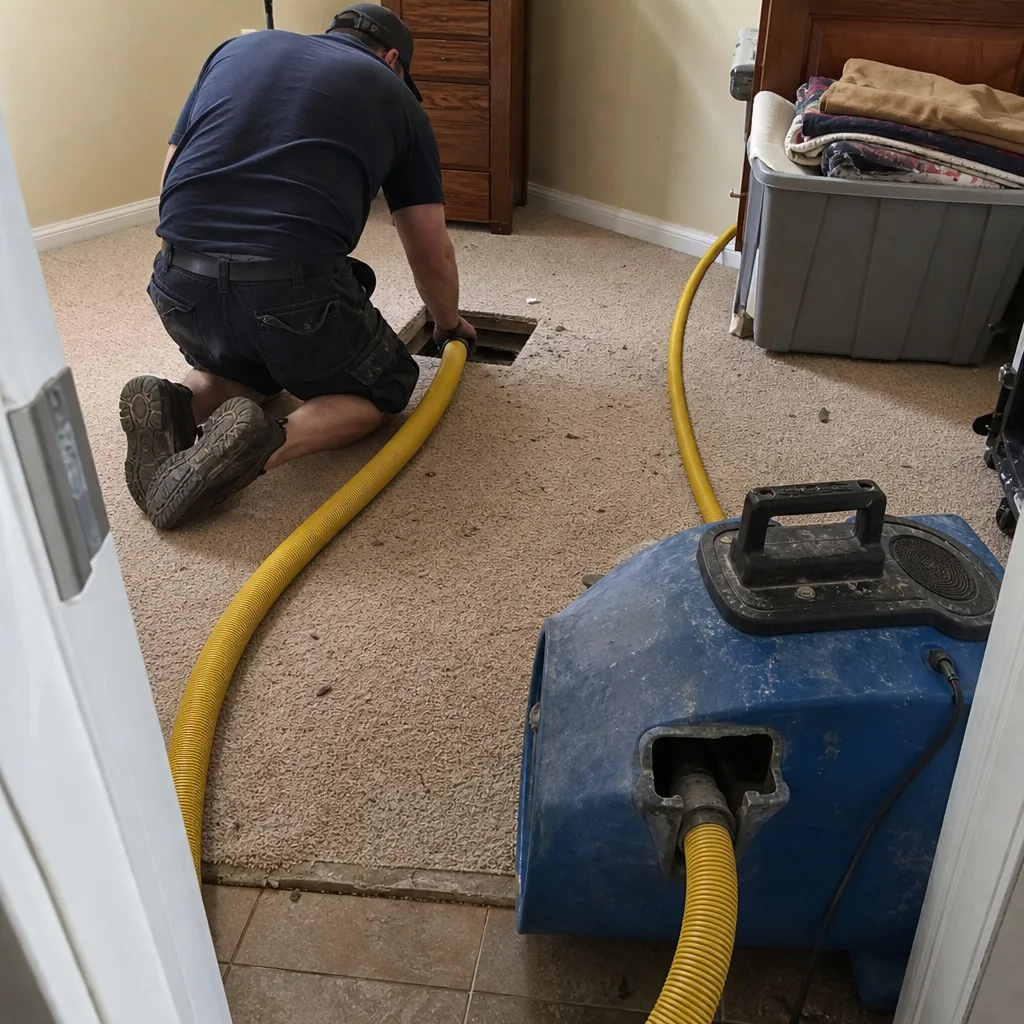 Before
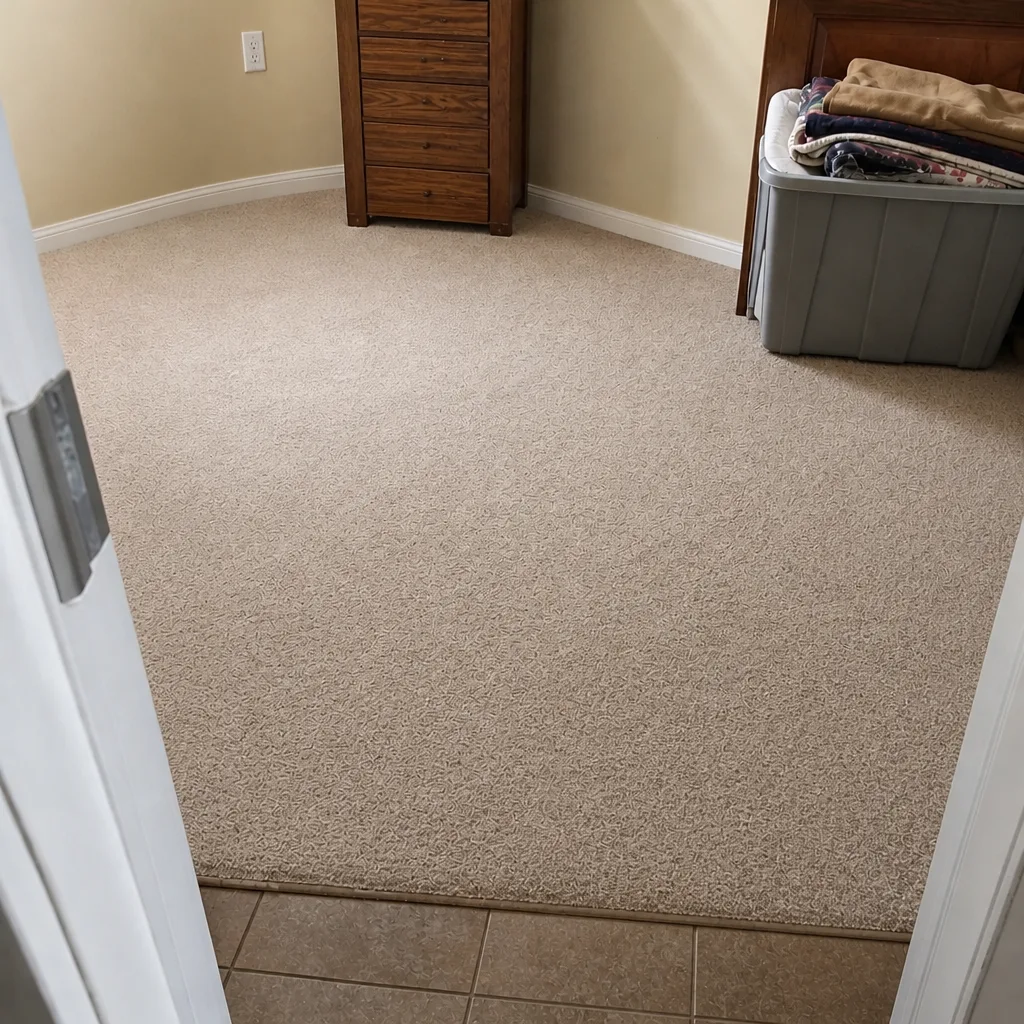 After
When to Call a Professional
Call a professional for any of the following: visible mold inside a register boot or at the equipment cabinet connection; musty odors when the system runs; uneven room-by-room airflow that has developed over the last heating or cooling season; heavy visible debris at registers after recent renovation; a dryer that takes notably longer to dry clothes; or a duct joint, flex run, or plenum connection you can see failed. For a cleaning that also covers the equipment-side inspection, call Sandy Air Duct Cleaning Pros for a free estimate in Sandy. Call (833) 858-9278. We answer 24/7. Fast dispatch from 7am to 7pm, Sunday through Friday.
For anything that crosses into mechanical work, meaning sealing that changes pressure balance, flex run replacement, or any service that opens the air handler cabinet, ask for the DOPL HVAC contractor license first. Our technicians have up to 15 years of experience identifying which category each finding belongs to, and every estimate is written per system before any work begins.
Frequently Asked Questions
No. Air duct cleaning as a standalone service does not require a permit from Sandy City or any state agency. Cleaning duct interiors, brushing, HEPA vacuuming, and sanitizing are not regulated work. The permit picture only changes when the job involves altering the system, such as adding a duct run, relocating a register, or replacing equipment. Call (833) 858-9278 for a free estimate. We answer 24/7.
No. Utah DOPL does not require a specific license to perform air duct cleaning. It does require an HVAC contractor license to perform mechanical work on HVAC systems, including duct sealing that changes pressure balance, flex duct replacement, register relocation, or service inside the air handler cabinet. A cleaning-only company can legally clean your ducts. It cannot legally do the mechanical fixes that cleaning often reveals. Ask for the license number in writing before any mechanical scope is agreed.
Sandy City typically requires a mechanical permit when duct work alters the system’s design: adding a new run, relocating a register, replacing the air handler or furnace, or modifying equipment connections. Duct cleaning, sanitizing, and same-size register swaps generally do not require a permit. If you’re unsure how a specific task is classified, call the Sandy City building department before the work is scheduled. Ask the question in writing if the job is larger. Call (833) 858-9278 for a free estimate on the cleaning side.
Yes, for exterior or shared-element work. Interior duct cleaning does not usually trigger HOA review, but changing a dryer vent termination, replacing an exterior vent cap, or accessing a shared wall for duct work often requires architectural review committee approval. In Sandy’s master-planned communities, HOA rules layer on top of city code rather than replacing it. Read your CC&Rs before scheduling exterior work, and get approvals in writing.
Air duct cleaning in Sandy typically runs on a flat price per system, not per vent. The written estimate sets the price before any work begins. Companies that quote a low teaser price and then bill per vent once the tech is on site are a common source of frustration in this industry. Ask for a flat, written, per-system price with the scope spelled out. Call (833) 858-9278 for a free estimate. We answer 24/7.
Because the cheap quote is usually for a partial scope: a few registers opened, a surface vacuum at the closest access, no camera inspection, no equipment-side cleaning, and no before-and-after photos. The follow-up invoice after the tech is on site is where the price actually lands. A written flat price per system, with a camera inspection and documented photos, reflects what the job actually involves. Call (833) 858-9278 for a written estimate before you compare quotes. We answer 24/7. Fast dispatch from 7am to 7pm, Sunday through Friday.
Before-and-after photos of your own ducts, taken during the job and provided to you at completion. That’s the standard. A camera inspection on arrival tells you what condition the ducts were in, and the completion photos show what was removed and cleaned. If a contractor isn’t providing these, that’s the answer to your question. We photograph every job and include the photos with the written report. Call (833) 858-9278 to schedule.
The Bottom Line
Air duct cleaning in Sandy, UT does not require a permit or a state license. That’s the easy part. The regulated part is the work that happens after cleaning: duct sealing that changes system pressure, flex duct replacement, register relocation, or any work inside the air handler. Those need a Utah DOPL-licensed HVAC contractor, and if the scope modifies the duct system, Sandy City may want a permit pulled. HOAs in Traverse Ridge and South Mountain add exterior and shared-element review on top. The practical answer for any homeowner: ask for the license number, liability certificate, written scope, and permit answer before any work beyond cleaning is scheduled. Get the before-and-after photos. Call (833) 858-9278 for a free estimate on the cleaning side. Estimates are free, the price is set per system by the written estimate, and it’s locked before the technician starts.
Written by the team at Sandy Air Duct Cleaning Pros.