
Last updated November 25, 2026
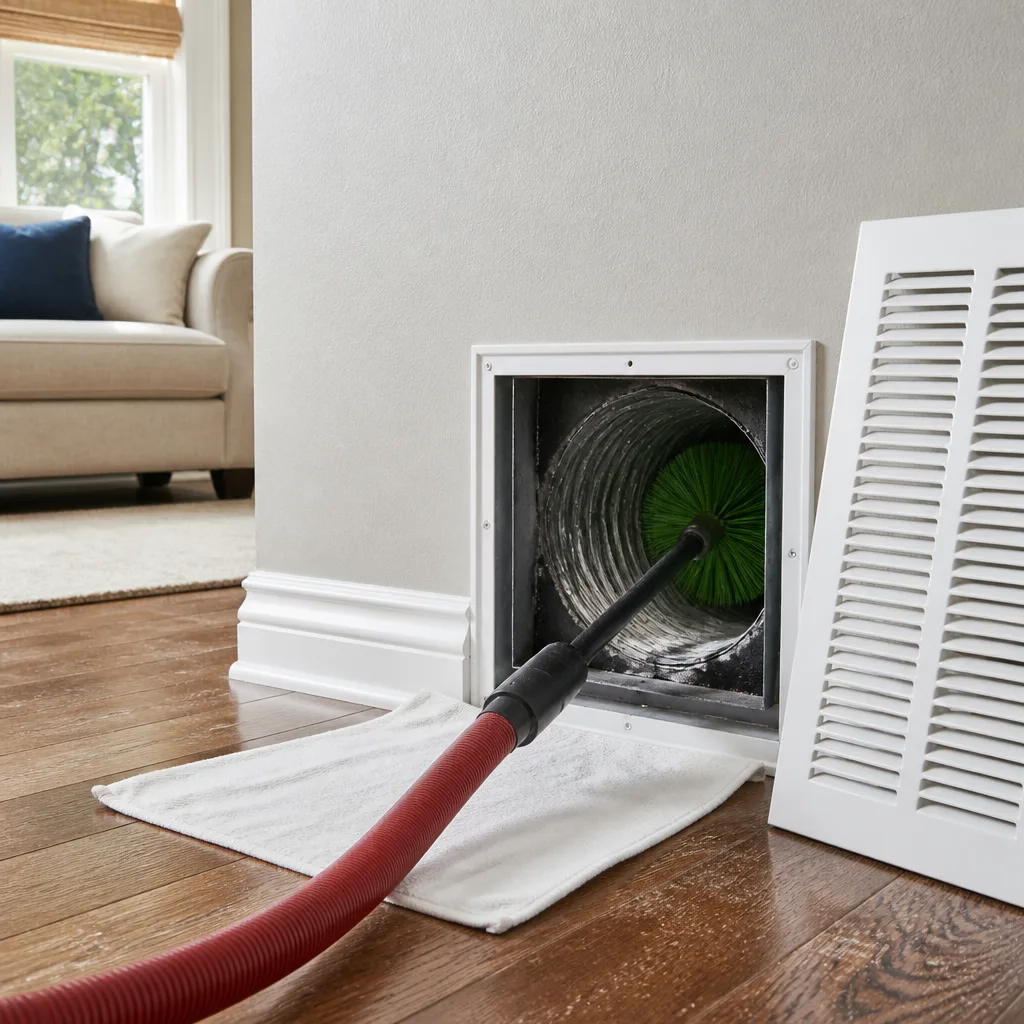
 Whole-home duct cleaning
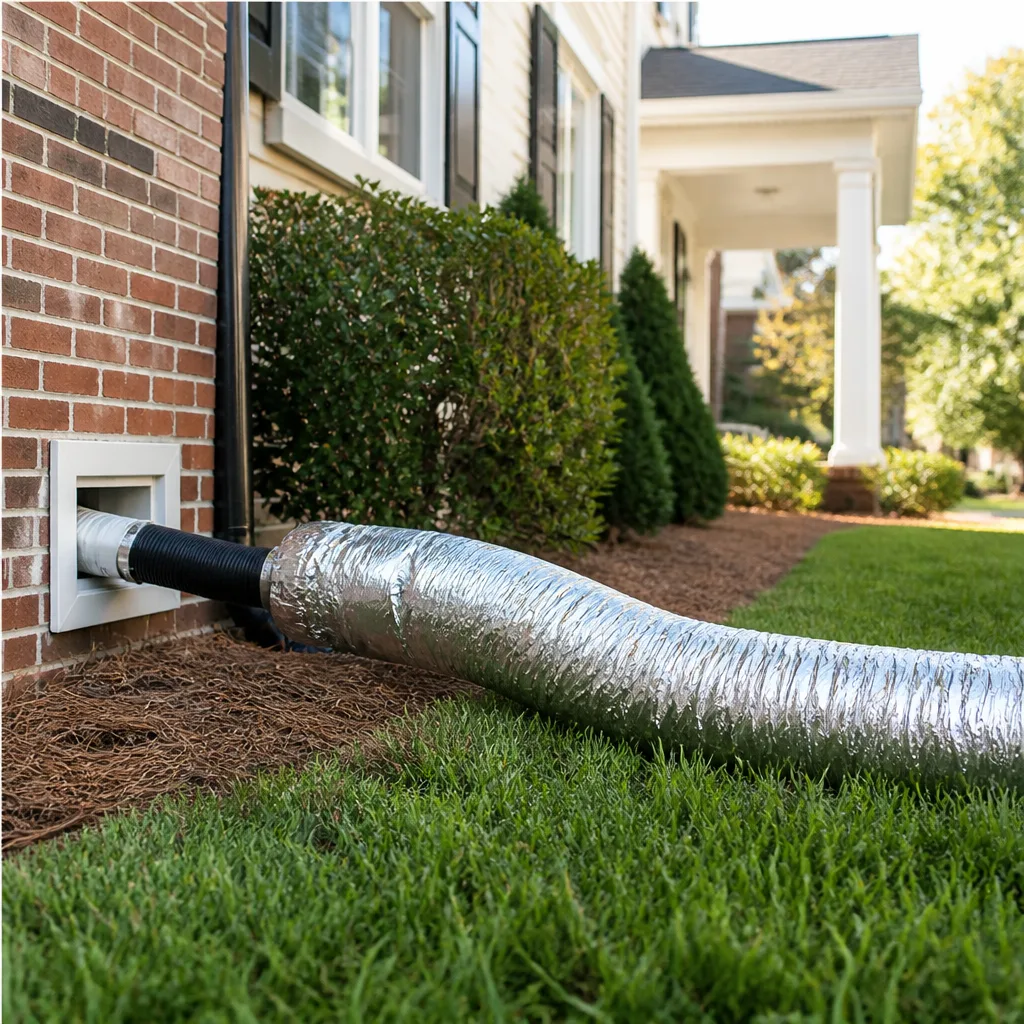
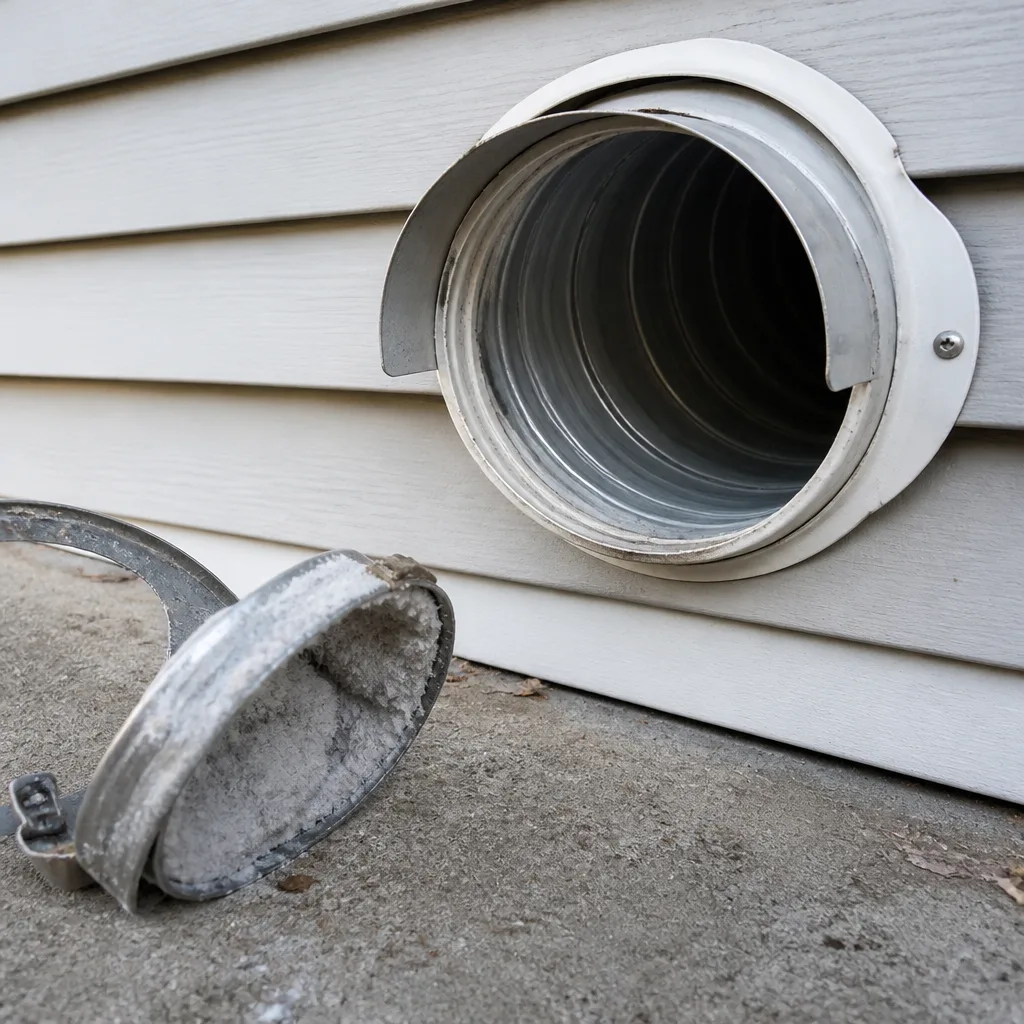 Dryer vent cleaning
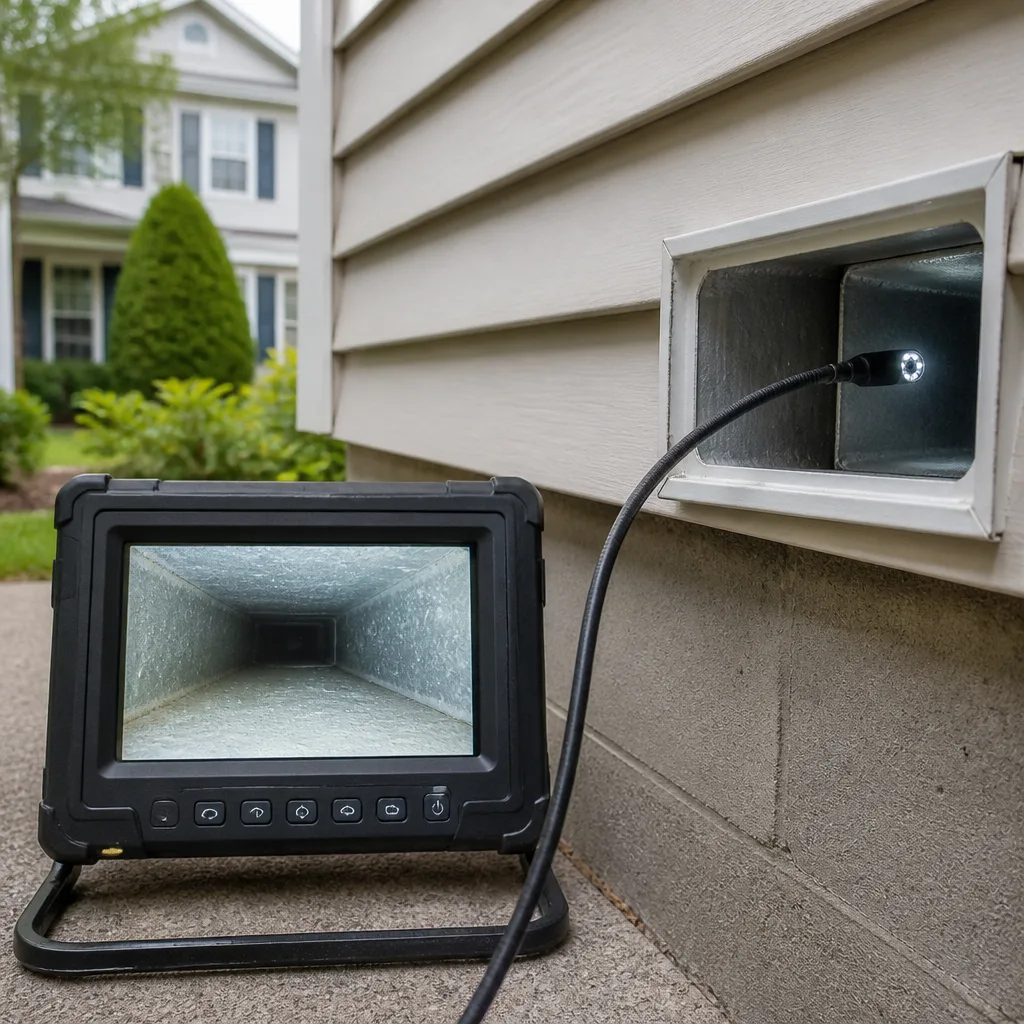 Camera inspection
 Sanitizing & deodorizing
Whole-system duct and dryer vent check with before-and-after photos - you see exactly what came out of your vents
That "$99 whole-house special" is a bait ad - the real number appears once they are in your hallway, or the "clean" is a shop-vac at the register. We photograph the inside of your ducts before and after instead.
The Complete Guide to Air Duct Cleaning in Sandy
Most air duct guides are written for the average American home. Sandy isn’t average. Sitting at roughly 4,500 feet against the Wasatch Range, this city gets inversion seasons that trap particulate in the valley, wildfire smoke that rolls in from surrounding ranges, and construction dust from one of the fastest-growing corridors in the West. Add dry high-desert air and you’ve got duct contamination patterns that national checklists simply don’t address. In this guide, we’ll walk the actual contamination lifecycle inside a Sandy home’s ductwork from install day forward: what settles where, why new builds are often the worst offenders, how source-removal cleaning differs from blow-and-go methods, and what a real NADCA-standard verification looks like before the technician leaves your driveway.
Quick Answer
Air duct cleaning in Sandy means removing settled particulate, construction debris, and biological growth from the entire duct system using negative pressure and contact agitation, not just blowing dust loose into your living space. Because Sandy’s high-altitude desert climate concentrates inversion smog and wildfire smoke near the valley floor, return air intakes here tend to trap more fine particulate than in low-elevation cities. A proper cleaning follows NADCA ACR standards and ends with photo verification of both the cleaning and the system’s post-job condition.
Styles & brands we work with
- Whole-home duct cleaning
- Dryer vent cleaning
- Camera inspection
- Sanitizing & deodorizing
Table of Contents
- Why Sandy’s Climate Makes Ducts Dirty Differently
- The Contamination Lifecycle of a Sandy Home’s Ducts
- Why New Construction Homes in Sandy Are Often the Dirtiest
- Source Removal vs. Blow-and-Go: What’s Actually Different
- What NADCA ACR Standards Actually Require
- How to Read Post-Cleaning Verification
- How Often Should Sandy Homes Get Duct Cleaning?
- What Does Air Duct Cleaning Cost in Sandy?
Why Sandy’s Climate Makes Ducts Dirty Differently
Sandy sits in a bowl. The Wasatch Range rises steeply to the east, the Oquirrhs sit to the west, and the Traverse Mountains close off the south. That geography is beautiful, but it also means airborne particulate doesn’t just blow through the way it does on open plains. During winter inversions, cold air gets trapped under warmer air above it. Everything that goes up – vehicle exhaust, wood smoke, dust – comes back down and settles across the valley floor, including Sandy, Draper, and the neighborhoods along the I-15 corridor.
What does that mean for your ducts? Your HVAC system is the biggest air mover in your house. During a multi-day inversion, the return air intakes pull in fine particulate that the standard 1-inch filter doesn’t fully capture. Over a season, that material accumulates on duct walls, plenum surfaces, and around the blower compartment. It doesn’t disappear when the inversion clears.
Wildfire seasons add another layer. When smoke from fires in the Wasatch or beyond drifts into the valley, particulate concentrations spike for days or weeks. Homes in Sandy that run their HVAC during smoke events pull that smoke through the system, and the fine ash fraction is small enough to bypass many filters and settle inside the duct network. The result is a duct system that accumulates material at higher rates than a comparable home in, say, the Midwest, where smog inversions and wildfire smoke simply aren’t a seasonal rhythm.
Two more Sandy-specific factors worth knowing:
- High-altitude dry air means less moisture in the ducts, so biological growth is less of a constant issue than in humid climates, but it also means dust stays loose and mobile longer instead of clumping and settling.
- Rapid Wasatch Front development means construction dust is a year-round presence in many Sandy neighborhoods, especially on the east bench where new subdivisions continue to fill in.
The upshot is that the standard “clean your ducts every 3 to 5 years” advice isn’t wrong for Sandy, but it’s incomplete. Homes near the corridor, homes running unfiltered returns during inversion and smoke seasons, and homes near active construction all accumulate faster.
The Contamination Lifecycle of a Sandy Home’s Ducts
Duct contamination isn’t a single event. It’s a progression that starts the day the system is installed and runs through decades of use. Understanding the stages helps you make smart decisions about when cleaning actually matters, and what kind of cleaning you need.
Stage 1: Install Day Through Year One
New ductwork arrives on-site with a factory coating of oil that helps the sheet metal survive shipping. It’s harmless in small amounts, but it gives dust somewhere to stick. During construction, drywall dust, insulation fibers, sawdust, and framing debris get pulled into the system or deliberately left behind when installers open duct runs before the system is capped. Every home starts with a thin layer of construction residue.
Stage 2: Years One Through Five, the System Settles In
Once the home is occupied, the normal load kicks in. Dust from everyday life. Pet hair. Cooking aerosol. In Sandy specifically, the annual inversion and wildfire season load up the system with fine particulate that a MERV 8 or standard pleated filter doesn’t capture completely. Around the return-air plenum and the blower box, that load adds up fast.
Stage 3: Years Five Through Ten, Growth Zones Appear
The blower compartment and the sections right after the air handler are the warmest, most humid parts of the system, so they’re the first places where small amounts of dust become biofilms. UV lights and proper filtration slow this down, but they don’t stop it. This is the stage where homeowners start noticing a faint musty smell when the fan kicks on, or worsening allergies in a specific season.
Stage 4: Year Ten and Beyond, the Efficiency Slide
Restricted airflow from material buildup on flex duct ribbing and around register boots forces the blower to work harder, which increases energy use and can stress the system’s components over time. In Sandy’s dry climate, dust stays mobile longer, which actually accelerates the slide compared to humid climates where clumping happens early and stabilizes.
Where a home lands on this lifecycle depends on square footage, filtration quality, how often filters get changed, whether pets or kids live there, and whether the home sits near active construction or a busy corridor.
Why New Construction Homes in Sandy Are Often the Dirtiest
It sounds backwards. A new build should be the cleanest duct system in the neighborhood. In our experience, the opposite is usually true. Homes fresh from construction in Sandy’s newer east-bench subdivisions and infill neighborhoods are frequently the homes with the most material still sitting in the ducts after move-in.
Here’s what’s going on:
- Duct runs are open during the build. Sheet metal gets installed early in the construction sequence, then drywall goes up around it, insulation gets blown into attics, and sawdust covers everything. All that material migrates into the open duct openings unless the installer takes the time to cap each run.
- Drywall dust is especially problematic. Gypsum dust is fine, alkaline, and adheres to bare metal. It settles deepest into the return trunks and the blower compartment, where it can be hard to reach with consumer equipment.
- Insulation fibers get pulled through. Any attic or crawlspace insulation disturbed during the build can end up in the system, especially if the HVAC gets run to test it before final cleaning.
- The builder’s final “cleaning” often isn’t a cleaning. Some builders do a quick shop-vac pass on the closest registers. That doesn’t touch the trunk, plenum, or blower compartment.
- Framing debris stays behind. Small pieces of framing offcuts, drywall scraps, and packaging materials occasionally end up inside duct runs and can rattle or restrict airflow until they’re found and removed.
If you’ve bought a new home in Sandy in the past few years, having the duct system inspected and cleaned before you fully settle in is a sensible move. You’ll know exactly what’s in your system and you’ll remove anything the builder left behind.
Source Removal vs. Blow-and-Go: What’s Actually Different
Two duct cleaning jobs can look similar on the invoice and be fundamentally different processes. The difference matters for what actually happens inside your house.
What “Blow-and-Go” Means
A blow-and-go job uses a shop-vac or a small blower at one or two registers. The technician turns the system on, blows air through the ducts, and vacuums from a few access points. What happens to the material? A lot of it gets pushed into the room or into other parts of the system that weren’t reached. The system is nominally cleaner at the register faces and no cleaner in the trunk, plenum, or blower compartment. There’s no negative pressure containment, so fine dust escapes into the air during the process.
What Source Removal Actually Involves
Source-removal cleaning follows NADCA ACR standards. It uses two principles at once: negative pressure containment (so loosened material goes into a HEPA-filtered vacuum, not into your living room) and contact agitation (brushes or air whips physically dislodge material from duct walls). At Sandy Air Duct Cleaning Pros, that means Rotobrush rotary brush and air whip tools connected to a HEPA vacuum, backed by an Abatement Technologies air filtration unit that keeps containment tight during the job. It’s the same equipment class that restoration crews use after a fire or flood, brought into a residential system.
The pieces matter:
- Rotobrush and Nikro rotary tools agitate duct walls to break material loose. Consumer vacuums spin a brush at low speed and don’t reach the full run.
- Negative pressure keeps loosened material moving toward the vacuum, not toward you.
- HEPA filtration on the vacuum side means the exhaust air leaving the machine is filtered, not just the intake.
- Access points need to be cut and sealed in strategic locations (not just at the registers) to reach the full run of every duct.
If a quote doesn’t mention negative pressure, access points, or HEPA filtration, you’re being sold a blow-and-go job whether or not the company calls it that. Ask specifically.
What NADCA ACR Standards Actually Require
NADCA is the National Air Duct Cleaners Association, and its ACR (Assessment, Cleaning, and Restoration) standard is the reference document the industry uses for what a legitimate duct cleaning job looks like. Most Sandy homeowners have never heard of it, and that’s fine, but knowing the basics puts you in a much better position to evaluate a quote.
Here’s the short version, in plain English:
- An assessment comes first. A trained technician should visually inspect the system, including the blower compartment and plenum, before recommending any cleaning. If a quote is given over the phone without looking at the system, it’s a guess.
- Source removal is the core method. NADCA doesn’t endorse any method that just sprays a chemical into the air stream and calls it cleaning. The standard is physical removal of accumulated material.
- The entire system gets addressed, not just the visible parts. That includes trunk lines, branch runs, returns, register boots, the plenum, and the air handler cabinet (with the components protected).
- Containment is required. Negative pressure, HEPA filtration, and proper sealing of the work area are part of the standard, not an upgrade.
- Verification is required. The standard calls for the job to be confirmed with visual inspection and, ideally, photo documentation before the technician leaves.
- The technician offers solutions, not fear. If an assessment turns up mold, moisture, or structural issues in the system, the appropriate response is to explain the finding and options. ACR doesn’t support the “your ducts are toxic, and it’s a health emergency” pitch.
What’s not required: a specific brand of equipment, a specific coupon structure, or a specific price. Standards cover method, not sales strategy.
How to Read Post-Cleaning Verification
The end of the job is where a lot of duct cleaning claims fall apart. The technician packs up, hands you a receipt, and drives away. You have no idea what actually happened inside the system. Any legitimate cleaning should end with a walkthrough you can actually evaluate.
Here’s what a proper walkthrough includes:
- Before-and-after photos of the same access points and duct runs, taken from the same angle. Without the “after,” the “before” means nothing.
- A look inside the blower compartment and at the plenum, not just register faces.
- Filters changed or confirmed clean at the air handler, and filter type noted for future reference.
- Any repairs or sealing addressed, with photo evidence if duct sealing or repair work was part of the appointment.
- A verbal summary of findings – anything unusual (moisture, disconnected runs, unusual debris) reported clearly.
- Sanitizing confirmation if air sanitizing was part of the job. Guardsman-backed protocols applied during a sanitizing service come with documented antimicrobial treatment, so ask what documentation is provided.
If a company is hesitant to show photos, or the “verification” is a verbal confirmation that you’ll have to trust, that’s a signal. A proper job is documented because the technician wants you to see it, not because they’re angling for a follow-up sale.
How Often Should Sandy Homes Get Duct Cleaning?
For most Sandy homes, a full-system duct cleaning every 3 to 5 years is a reasonable baseline. Homes on the east bench near active construction, homes running unfiltered returns through inversion and wildfire seasons, and homes with pets or allergy-sensitive occupants often need it closer to the 3-year end. Homes with premium filtration systems and clean air handlers can stretch toward 5 years.
Specific signals that mean you shouldn’t wait for the calendar:
- Visible dust puffing out of registers when the fan starts
- A musty or smoky smell when the HVAC kicks on
- Allergy symptoms that get worse indoors or peak with specific seasonal changes
- Uneven airflow between rooms that wasn’t there before
- Energy bills climbing without a change in usage or rates
- A recent remodel, major drywall work, or home purchase in the past 18 months
If any of those are true, an assessment is cheaper than guessing. A good technician will tell you if the system doesn’t need cleaning yet – and that answer is more useful than a yes.
What Does Air Duct Cleaning Cost in Sandy?
Air duct cleaning in Sandy typically costs between $350 and $900 for a single-family home, depending on square footage, system complexity, and whether duct repair, sealing, or sanitizing is included. The written estimate always sets the final price, and a reasonable estimate is free and comes after a technician looks at the actual system.
Here’s how the line items generally break down:
| Service | Typical Range |
|---|---|
| Full-system air duct cleaning (single-family home) | $350 – $900 |
| HVAC cleaning (air handler + blower compartment add-on) | $150 – $350 additional |
| Duct repair and sealing (per leak cluster) | $250 – $700 |
| Air sanitizing (Guardsman-backed treatment) | $150 – $400 |
| Dryer vent cleaning | $100 – $250 |
Two things to watch for when comparing quotes:
- Per-vent pricing. A quote that advertises a price “per vent” and then adds charges is usually designed to balloon by the time the invoice prints. Whole-system pricing is what holds up.
- Coupon-driven jobs. A very low headline price almost always means the tech will find something on-site that wasn’t in the original quote. Ask what the whole-system price is, in writing, before anyone walks through your door.
Good pricing is boring. You get a price before work starts, the price doesn’t change, and you get photo documentation at the end. Anything more complicated than that is a sales tactic, not a service model.
Common Mistakes to Avoid
- Booking on price alone. A $99 coupon for full-system cleaning in Sandy doesn’t cover a real source-removal job with negative pressure and HEPA filtration. Expect a follow-up invoice if you book on the teaser price.
- Assuming “new home” means “clean ducts.” New construction in Sandy’s active subdivisions is often the dirtiest duct system a homeowner will ever deal with. Drywall dust and construction debris settle in before move-in.
- Letting a technician skip the blower compartment. Cleaning registers without cleaning the air handler cabinet and plenum leaves the biggest contamination source untouched. Ask specifically what’s included.
- Accepting a “sanitizing” service without asking what’s behind it. Sanitizing should follow cleaning, not replace it, and it should use a documented protocol. Guardsman-backed treatments come with that documentation; a spray bottle of “disinfectant” doesn’t.
- Skipping the photo walkthrough. If you don’t see before-and-after photos of your system at the end of the job, you have no way to know whether the work happened. Ask before you book.
- Ignoring duct leaks while you’re having cleaning done. If you’re already paying for the system to be open, that’s the right time to have leaks found and sealed. Doing it in two visits costs more.
- Running the system during an inversion with a filter that’s too weak. Sandy’s inversion seasons push a lot of fine particulate through return air. Upgrading to a Honeywell or Aprilaire filtration setup makes more difference than most homeowners realize.
See the difference
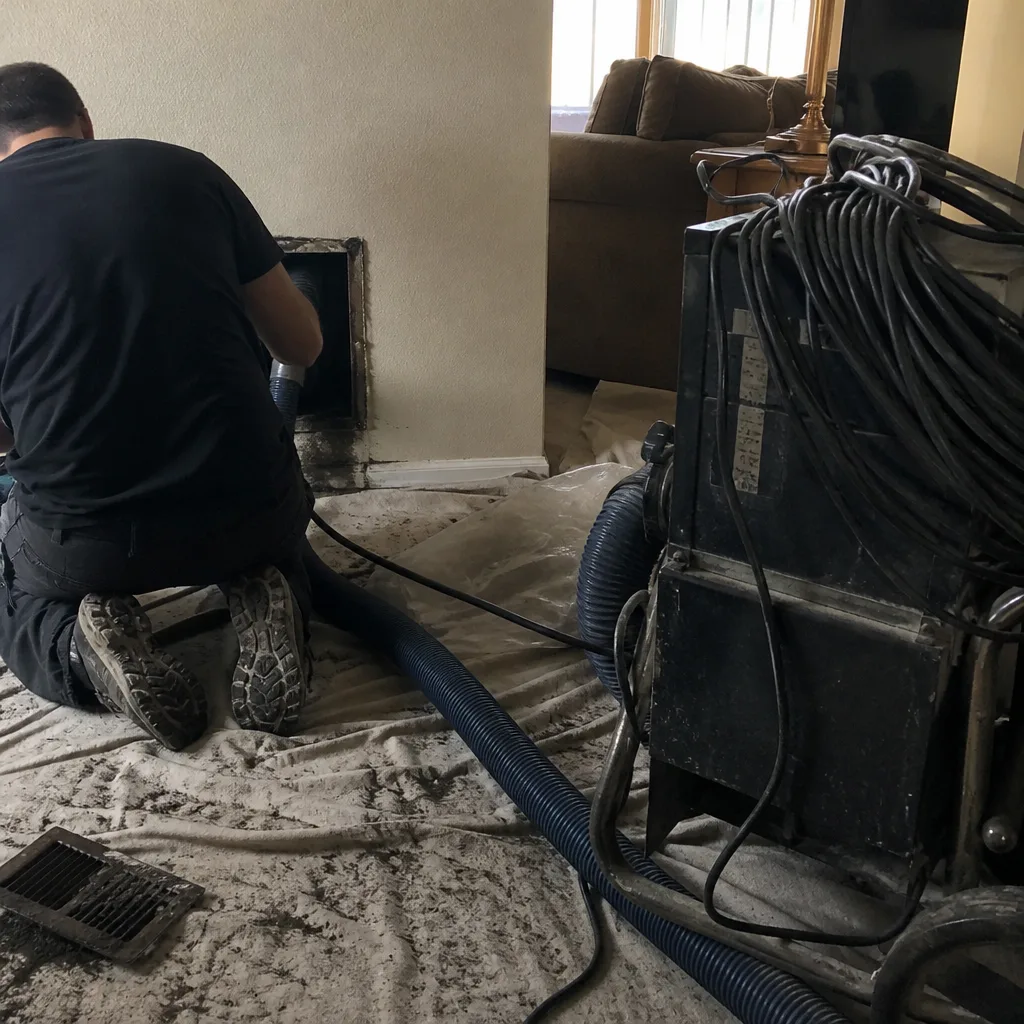 Before
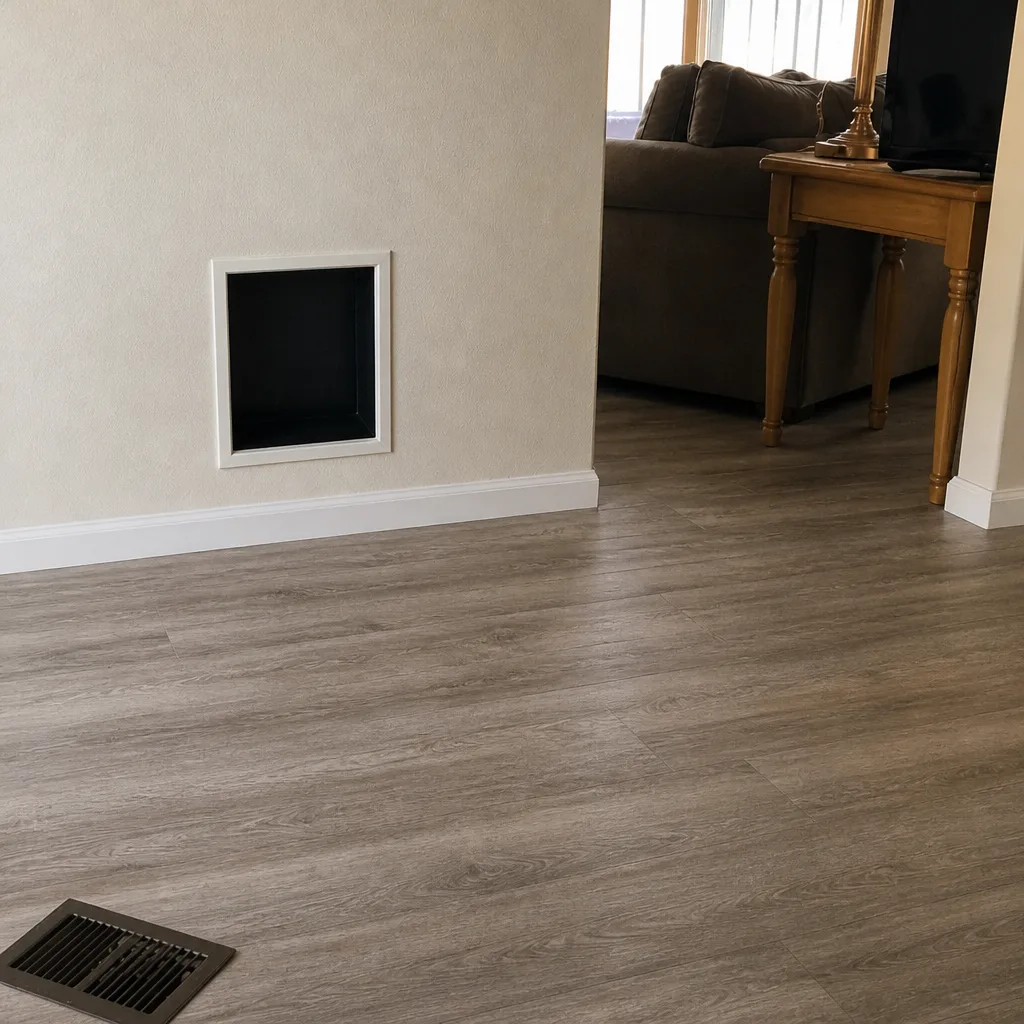 After
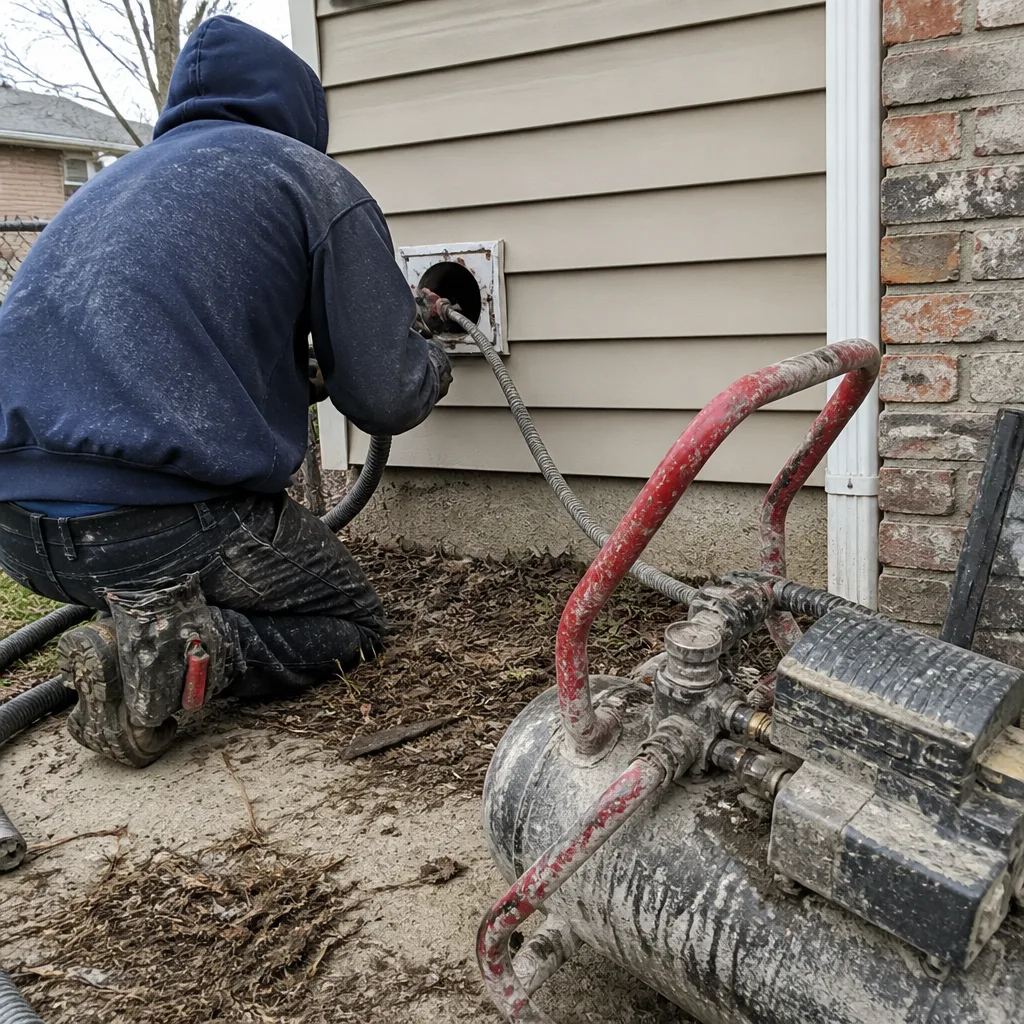 Before
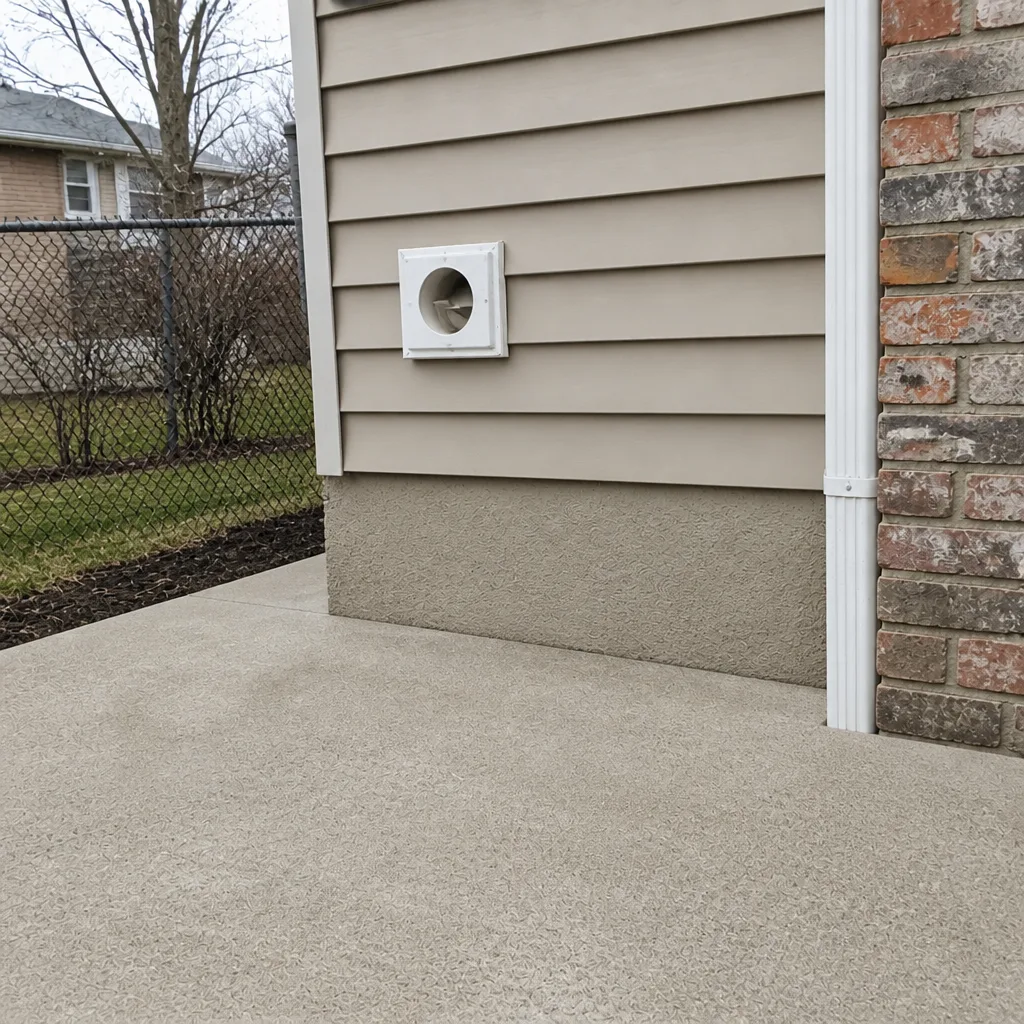 After
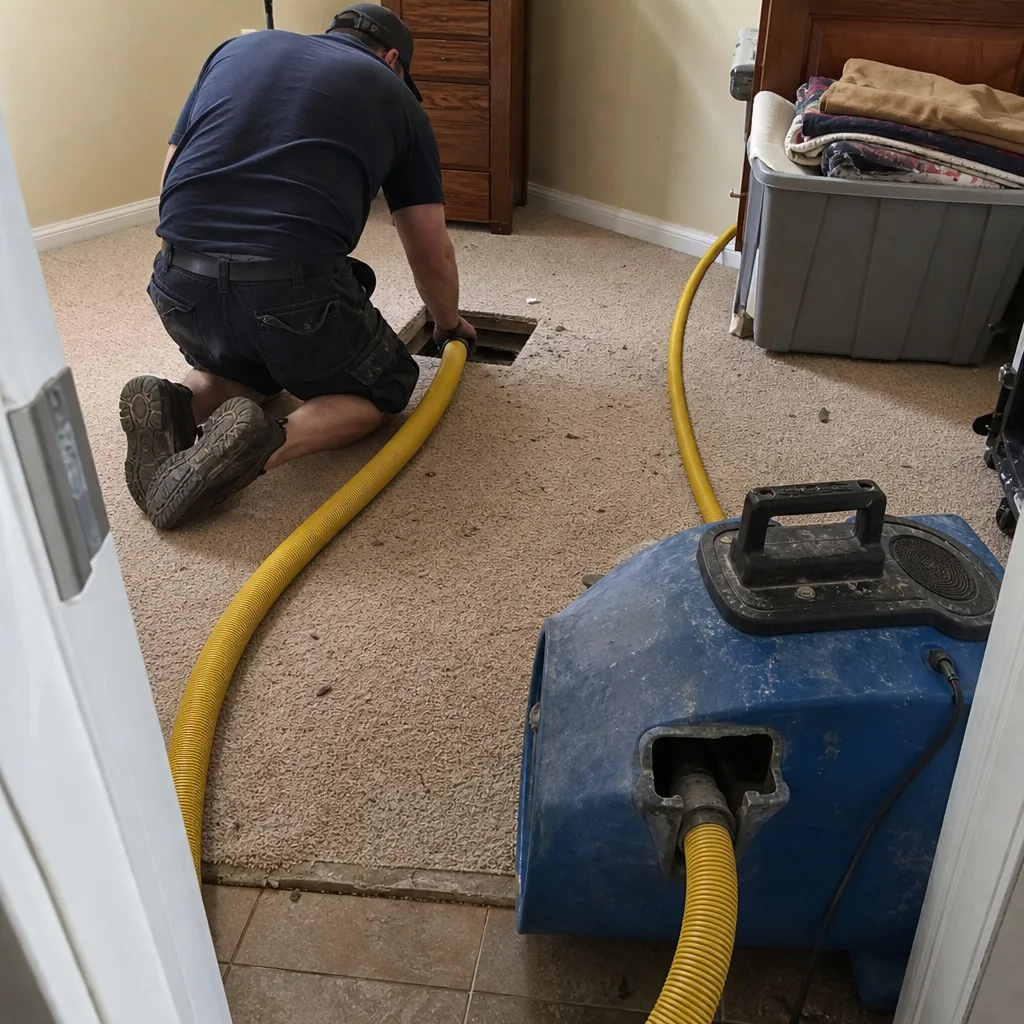 Before
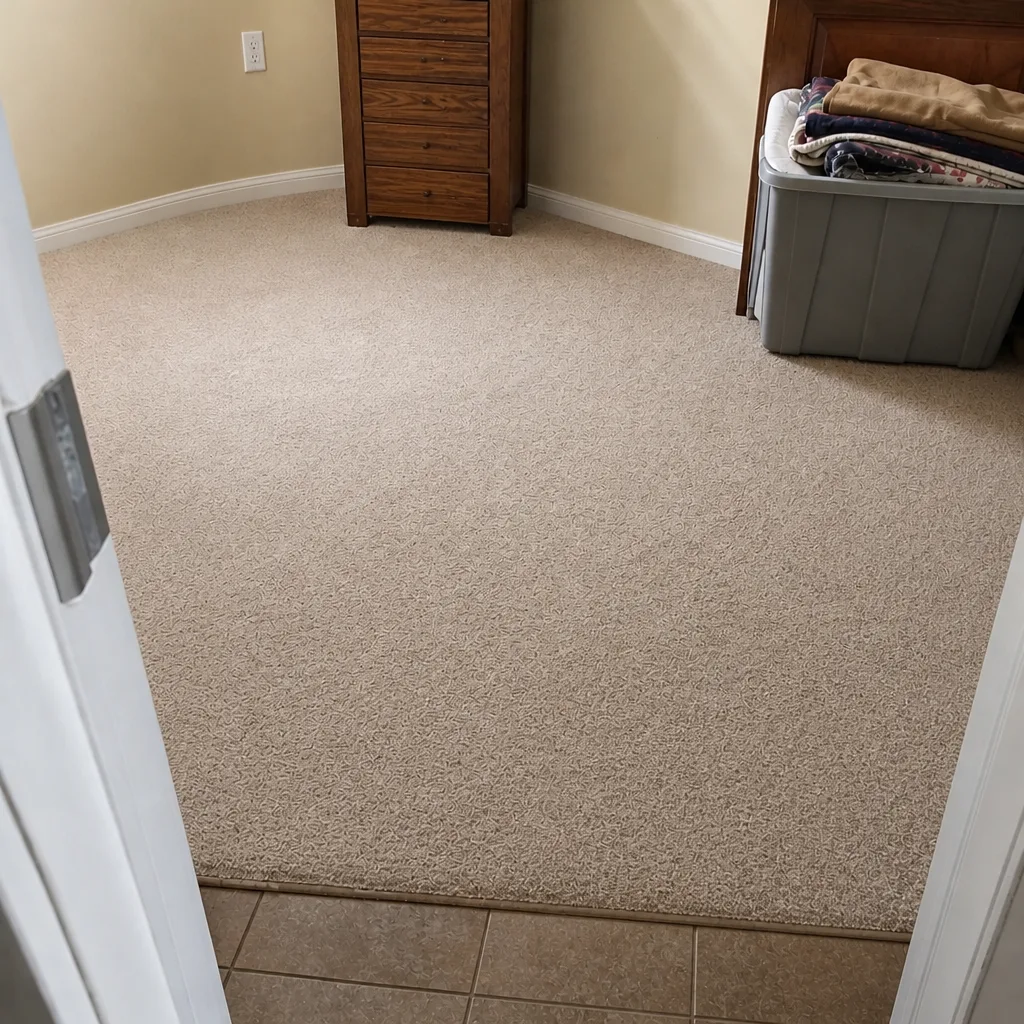 After
When to Call a Professional
Some duct issues are homeowner territory – changing filters, checking registers, cleaning vent grilles. Others need trained equipment and access. Call a professional if you’re seeing dust puff out of supply registers when the system kicks on, if a musty or smoky smell lingers after the fan runs, if airflow between rooms has gotten noticeably uneven, or if a recent remodel left fine dust everywhere. If you’ve bought a new home in Sandy in the past year or two, an assessment is worth doing before you settle in fully. If you or someone in the home has persistent allergy symptoms that seem worse indoors, an assessment will tell you whether the ducts are part of the answer. Sandy Air Duct Cleaning Pros offers free estimates in Sandy – call (833) 858-9278. Our technicians have up to 15 years of experience, use Rotobrush and Nikro equipment on every job, and show you before-and-after photos before they leave.
Frequently Asked Questions
Whole-system air duct cleaning for a typical Sandy single-family home runs $350 to $900, with the exact number depending on square footage, system complexity, and any add-ons like duct sealing or sanitizing. The written estimate always sets the final price. Call (833) 858-9278 for an exact quote – estimates are free.
Cheap quotes usually skip the parts of the job that cost money: negative pressure containment, HEPA filtration, access-point cuts, the blower compartment, and photo verification. What’s left is essentially a shop-vac job at the registers, with a follow-up invoice for anything the technician finds on-site. Ask what’s included in the price, in writing, before booking.
You should see before-and-after photos of the same access points at the end of the job, taken from the same angle, plus a look at the blower compartment and plenum. A legitimate technician wants you to see the results because it protects both of you. If photos aren’t offered, ask for them.
Every 3 to 5 years is a reasonable baseline for a Sandy home, but the right answer depends on your specific situation – proximity to construction, filtration quality, pets, allergy-sensitive occupants, and whether you’ve had a recent remodel. Homes near active east-bench construction tend toward the 3-year end. Call (833) 858-9278 and we can talk through your situation.
Sandy’s winter inversions and wildfire smoke seasons do concentrate fine particulate in the valley, which means return-air intakes here pull in more fine dust than in low-elevation cities without those seasonal patterns. Whether that translates to more frequent cleaning depends on your system and filtration, but it’s a real local factor worth factoring in.
Cleaning removes physical material – dust, debris, biofilm – from duct surfaces. Sanitizing applies a documented antimicrobial treatment after cleaning to address remaining microorganisms. Sanitizing without prior cleaning doesn’t work well because the treatment can’t reach what the debris is covering. Guardsman-backed protocols are the standard we apply when sanitizing is part of the job.
Yes. The combination of a high-altitude dry climate, inversion seasons, and rapid construction means Sandy homes tend to accumulate construction-dust residue and fine particulate faster than homes in more stable climates, and blower compartments show buildup sooner than national averages suggest. That’s why our HVAC cleaning service always includes the air handler cabinet, not just the accessible duct runs.
If the dryer has been running longer than usual to dry a load, or the exterior vent flap isn’t opening freely, it’s worth checking. Our dryer vent cleaning service handles lint buildup that regular cleaning can’t reach, which is a separate fire-safety concern from duct cleanliness. It’s often practical to schedule both in one visit.
The Bottom Line
Sandy’s ducts are not average, and neither is the cleaning they need. High-altitude desert air, inversion seasons that trap particulate near the valley floor, wildfire smoke events, and rapid construction across the Wasatch Front all create contamination patterns that generic national guides don’t address. A proper cleaning uses source-removal method with negative pressure and HEPA filtration, follows NADCA ACR standards, covers the full system including the blower compartment, and ends with photo verification you can actually review. If you’re ready to know what’s in your ducts – or you want to fix leaks and seal them while the system is open – we can help. Sandy Air Duct Cleaning Pros provides air duct cleaning, duct repair and sealing, air sanitizing, HVAC cleaning, and dryer vent cleaning across Sandy and the surrounding area, using Rotobrush, Nikro, Abatement Technologies, Honeywell, and Aprilaire equipment. The local pro we connect you with is licensed and insured as their state requires. Call (833) 858-9278 for a free estimate. We answer 24/7. Fast dispatch from 7am to 7pm, Sunday through Friday.
For a full look at the services we connect Sandy homeowners with, visit Sandy Air Duct Cleaning Pros.
Written by the team at Sandy Air Duct Cleaning Pros.