
Last updated November 25, 2026
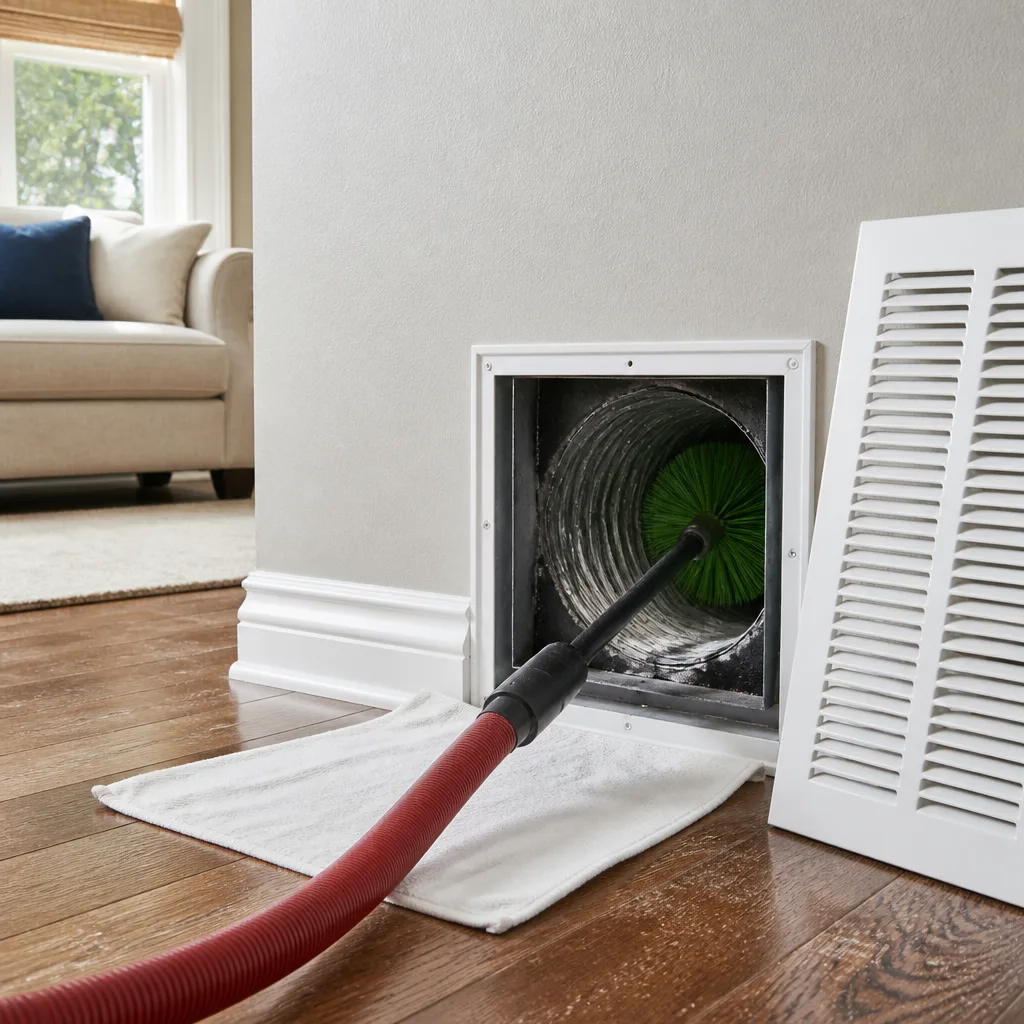
 Whole-home duct cleaning
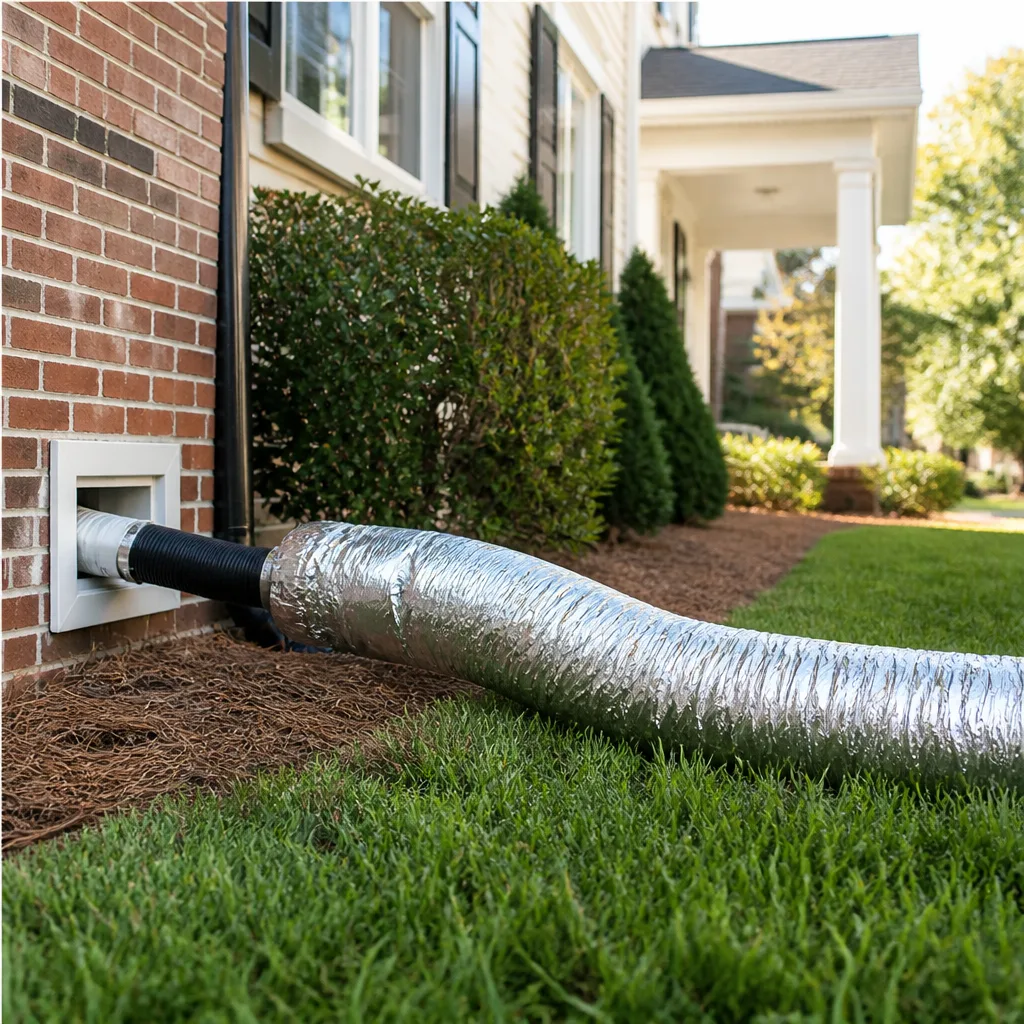
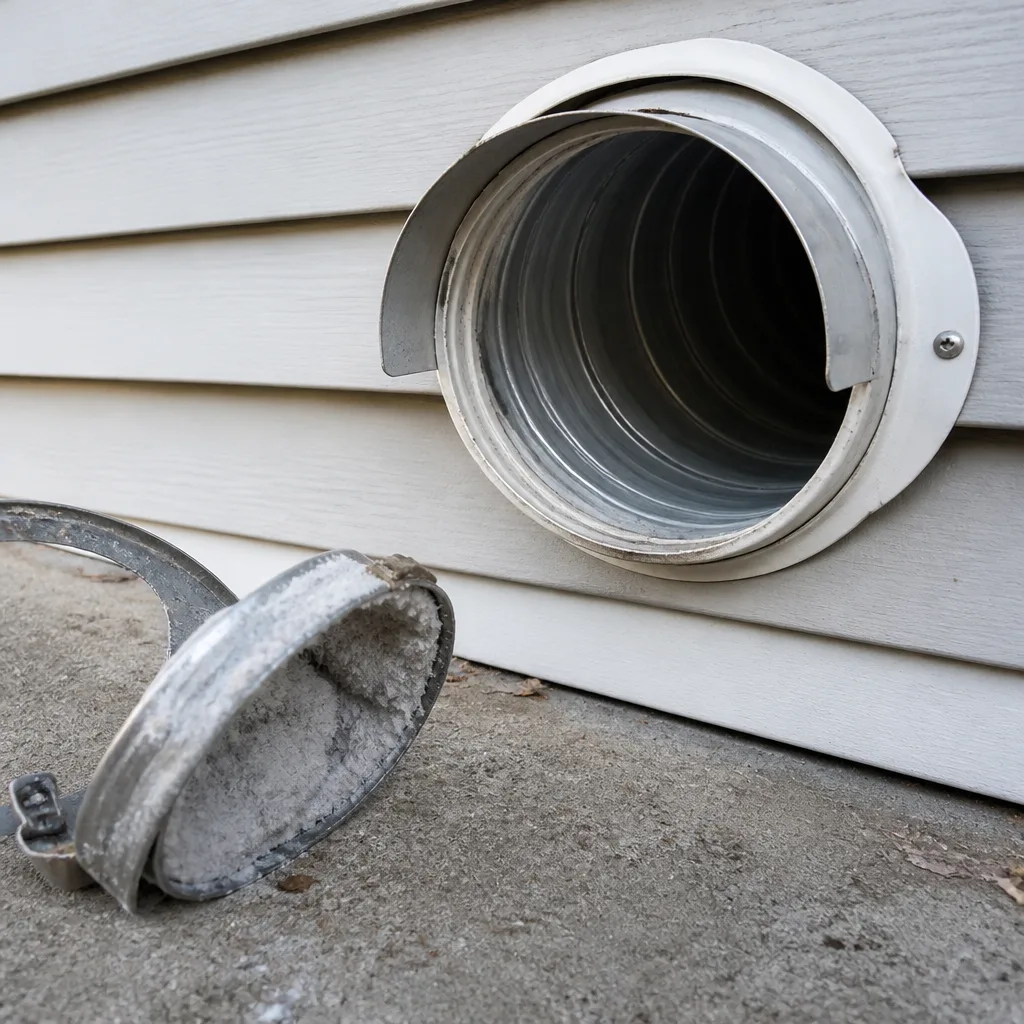 Dryer vent cleaning
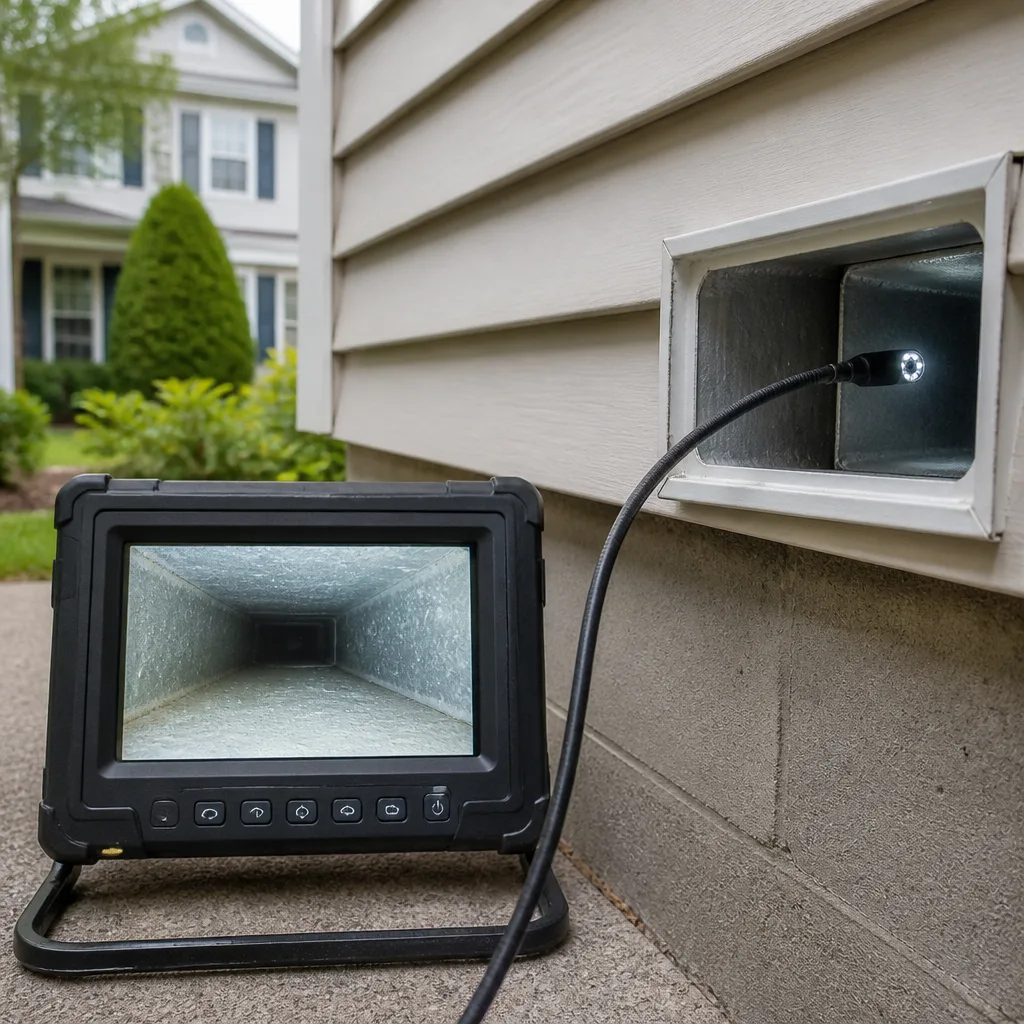 Camera inspection
 Sanitizing & deodorizing
Whole-system duct and dryer vent check with before-and-after photos - you see exactly what came out of your vents
That "$99 whole-house special" is a bait ad - the real number appears once they are in your hallway, or the "clean" is a shop-vac at the register. We photograph the inside of your ducts before and after instead.
Air Duct Cleaning Emergency Preparedness Guide for Sandy Homes
Most homeowners treat their ducts as passive. Air goes in, air comes out, and nobody thinks about what happens in between. Sandy doesn’t allow that luxury. The valley’s wildfire smoke weeks, the periodic inversions that push air quality into ranges you can see and taste, and the seismic reality of the Wasatch Fault zone mean your duct system is either a barrier between your family and bad outdoor air or a distribution network for it. This guide covers how to inspect your ducts after an earthquake, how to configure your HVAC during active smoke, when a clean is genuinely urgent rather than scheduled, and what to have on hand before an event. A little preparation now beats scrambling in Sandy when the air turns brown.
Quick Answer
Emergency air duct preparedness in Sandy means three things: keeping correctly sized MERV 13 or higher filters in stock, knowing how to shut down and seal your HVAC system during active wildfire smoke, and scheduling a professional inspection after any earthquake, flood, or smoke event that significantly loads your ducts. Cleaning is urgent when you can smell smoke or mustiness from the vents, see visible debris accumulation, or find moisture intrusion near duct runs; otherwise a scheduled professional cleaning is the right call. Our technicians have up to 15 years of experience and have seen what happens to unprotected duct systems during Sandy’s worst air quality weeks.
Styles & brands we work with
- Whole-home duct cleaning
- Dryer vent cleaning
- Camera inspection
- Sanitizing & deodorizing
Table of Contents
- Why Air Duct Preparedness Matters More in Sandy
- Post-Earthquake Duct Inspection Protocol
- Wildfire Smoke Protocol: How to Configure Your HVAC
- Post-Event Cleaning Triggers: When Is a Clean Urgent?
- Water Intrusion and the 48-72 Hour Window
- Your Emergency Air Duct Kit
- Pre-Event Duct Maintenance Checklist
- When to Call a Professional
Why Air Duct Preparedness Matters More in Sandy
Sandy sits in a bowl. That’s not a figure of speech. The Salt Lake Valley’s geography traps air in ways that coastal or open-plain cities never experience, and the Wasatch Mountains that make this place beautiful are the same peaks that hold smoke and inversion pollution against the valley floor during certain weather patterns. When wildfire smoke from summer fires fills the valley, or a winter inversion traps particulate under a temperature ceiling, Sandy homes absorb that air every time the HVAC system runs.
Three hazards define the local threat picture:
- Wildfire smoke corridors: Summer and early fall smoke events push particulate matter into the valley for days or weeks at a time, with concentrations that fluctuate hourly. Fine smoke particles are small enough to pass through standard fiberglass filters and settle inside duct runs.
- Seismic activity: The Wasatch Fault runs along the valley’s eastern bench, putting Sandy within the regional seismic risk zone. A significant event can shift flex duct connections, open seams at rigid joints, and stress air handler mounts.
- Inversion events: In winter, cold air settles beneath a warm layer, trapping vehicle exhaust, wood smoke, and industrial emissions near the ground. These events can last days, and every HVAC cycle pulls that trapped air through your system.
Under normal conditions, ducts distribute conditioned air. Under these conditions, they distribute whatever’s in the outdoor air too, unless filtration and maintenance are keeping pace. That’s the core argument for preparedness: in Sandy, the stakes are seasonal and recurring, not hypothetical.
Post-Earthquake Duct Inspection Protocol
After any shift felt in the Sandy area, your ducts need a look before you trust the system with another heating or cooling season. The Wasatch Fault seismic zone means this isn’t a drill. Flex duct connections are the most vulnerable point. A ground shift can pull a flexible connection loose from its collar at the air handler or a register boot, creating a gap that leaks conditioned air into a crawlspace or attic and pulls dust, insulation fibers, or outdoor air into the airstream.
Here’s the sequence we recommend for a post-earthquake walkthrough:
- Shut off the HVAC system. Don’t run it until you’ve done a visual inspection.
- Check flex duct connections at the air handler. Look for separation at the collar, visible gaps, or duct material that’s pulled away from the fitting.
- Inspect rigid duct joints in accessible spaces. Attic and crawlspace runs are where you’ll find opened seams, displaced hangers, or ducts resting on debris.
- Verify the air handler mount. An air handler that shifted on its platform can stress the supply and return connections. Look for tilted equipment, bent refrigerant lines, or disconnected drain lines.
- Check register boots for separation from the floor or wall. A boot that’s pulled free creates a direct path for attic or subfloor air into the living space.
- Note any debris that fell into open registers or duct openings. Drywall dust, insulation, or ceiling material needs to be removed before the system runs again.
- Call for a professional inspection if you find any of the above. Duct repair and sealing is our specialty, and we can fix what we find in the same visit as a cleaning.
If the inspection turns up no visible damage, run the system briefly and listen for new rattles, whistles, or airflow changes. Those sounds often signal a leak you can’t see from outside.
Wildfire Smoke Protocol: How to Configure Your HVAC
During a smoke event, the question isn’t whether to run your HVAC but how. The system itself isn’t the enemy; unfiltered operation is. Here’s the decision framework we walk Sandy homeowners through when smoke rolls in.
When to run your HVAC during smoke
Run the system on fan-only mode or with the fan set to “on” continuously if you have a MERV 13 or higher filter installed. This keeps air moving through the filter, reducing indoor particulate concentrations compared to a system that cycles on and off. Keep windows and doors closed. If your system has a fresh-air intake, close or damper it off during the smoke event, since pulling outdoor air into the return is counterproductive.
When to shut it off
Shut the system down if your filter is standard fiberglass or MERV 4 or lower. A low-efficiency filter does almost nothing against sub-micron smoke particles and can actually distribute them more evenly through the house. Shut off if you have no filter installed, or if the filter is visibly loaded and you don’t have a replacement on hand. Shut off if you smell smoke coming from the supply registers, which suggests the return system or the duct interior is pulling from a contaminated source.
The filtration threshold
MERV 13 is the practical minimum for filtering fine smoke particulate. It captures a meaningful share of the sub-micron particles that make smoke a health concern, without creating so much static pressure that your blower motor struggles. Higher ratings exist, but MERV 13 is the balance point most residential systems can handle. Check your system’s specifications, and don’t run a higher MERV than the equipment is rated for.
Honeywell and Aprilaire both make compatible filtration products for residential systems, and we regularly recommend filter cabinet upgrades when homeowners in Sandy want a permanent solution instead of the seasonal filter-fold-and-replace cycle. A properly sealed filter cabinet is also part of the work; a filter that bypasses around its frame catches very little.
Post-Event Cleaning Triggers: When Is a Clean Urgent?
Not every smoke week justifies an emergency cleaning call. Some justify a scheduled one. Here’s how to tell the difference. In our experience, the deciding factor is whether the duct system was protected during the event.
Signs that an urgent cleaning is warranted
- Persistent smoke odor from the vents that continues for days after the outdoor air has cleared. Smoke particles can settle into duct lining and interior surfaces and continue off-gassing into the airstream.
- Visible debris on the register covers or in the first few inches of duct you can see with a flashlight. That’s evidence of particle accumulation that extends further than you can reach.
- Increased allergy or respiratory symptoms in household members that track with the HVAC running. This is a signal, not a diagnosis, but it’s worth acting on.
- A heavy-loading event: a week or more of sustained smoke, or a major inversion period, combined with a low-MERV filter at the time. The particles had nowhere to go but into the duct interior.
- Any water intrusion during the event, including a roof leak or flooding that affected duct runs. That’s a separate protocol, covered below.
When a scheduled cleaning is the right call
If your system had a proper MERV 13 filter during the smoke event, the filter was changed at the end of it, and you don’t notice odors or symptoms, you can wait for a scheduled air duct cleaning at your regular interval. A filter doesn’t stop everything, but a good one does reduce the loading that reaches the ducts. Post-event access to a trained technician’s inspection is the way to confirm either way.
Water Intrusion and the 48-72 Hour Window
Water in your duct system is a distinct emergency that has nothing to do with smoke or dust. It happens more than people realize in Sandy: a basement flood that reaches the air handler, a roof leak that drips into attic duct runs, a plumbing failure that soaks a ceiling panel above a register. When moisture reaches the ducts, a 48 to 72 hour window opens before biological contamination risk escalates.
Here’s what that window looks like:
- Hour 0-24: Stop running the HVAC system. Any moisture in the duct interior plus moving air plus a warm environment is a favorable setting for mold and bacterial growth. Shut it down and start drying.
- Hour 24-48: Get air movement and dehumidification into the affected area. Open access panels if you have them. Run fans in the room, not through the ducts. Call for an inspection so someone can assess the extent of moisture in the duct interior, not just the visible damage.
- Hour 48-72: This is where the risk curve bends upward sharply. A duct interior that stays damp past 72 hours can develop visible mold growth. If you’re past that point or approaching it, the cleaning becomes a sanitizing job as well as a debris removal job. Our Air Quality & Sanitizing service uses Guardsman protocols, which address microbial growth rather than just clearing visible dust.
If the duct material itself is saturated and damaged, cleaning may not be enough; duct repair or replacement of the affected run is the right answer. We repair what we find, not just what’s easy to clean. The important thing is getting an inspection within the first two days of discovering the water intrusion, before the timeline makes a straightforward problem more involved.
Your Emergency Air Duct Kit
The difference between a manageable event and a difficult one is usually what’s sitting in a closet when the event begins. Here’s the kit we suggest Sandy homeowners assemble now, before wildfire season and before winter inversion months:
- Spare filters in the correct size. Measure your filter slot and buy two or three filters in the right dimensions. Keep one MERV 13 on hand for smoke and inversion events, and a standard filter for routine use if your system’s blower motor isn’t rated for constant high-MERV filtration. Write the size on a note taped to the air handler so nobody guesses at the hardware store.
- A bright flashlight. You’ll use it to inspect register openings, duct connections, and the air handler cabinet. A phone light works, but a dedicated flashlight is easier to angle into tight spaces.
- Duct tape or foil tape. For temporary sealing of a discovered gap or a loose flex connection after an earthquake. This is a stopgap, not a fix; get it evaluated professionally.
- N95 masks. If you’re doing any inspection or cleanup after a smoke event or flood, protect yourself. Fine particulate and mold spores are both inhalation hazards.
- Contractor contact information, written down. Store the number for a duct cleaning and repair outfit that can handle the scope of an emergency. In Sandy, that’s Sandy Air Duct Cleaning Pros. Our number is (833) 858-9278. We answer 24/7. Fast dispatch from 7am to 7pm, Sunday through Friday. Write it on the kit box so it’s there when the power’s out and your phone is at 2 percent.
- A written record of your system. Filter sizes, equipment model numbers, duct layout notes if you have them. In a real emergency, having this saves time.
Pair the kit with knowledge of what your system’s filter actually is. Many homeowners assume they’re running a high-MERV filter and discover it’s a basic fiberglass panel when they finally look. Open the filter slot today, check the rating, and confirm the size. That’s the single most useful preparation step, and it costs nothing but a minute.
Pre-Event Duct Maintenance Checklist
Emergency preparedness is cheaper and easier when the underlying system is in decent shape. These are the maintenance actions that make the biggest difference in Sandy before an event arrives:
- Seal duct leaks now, not after the earthquake. A duct system that’s leaking 20 percent of its air into the attic is pulling unsealed air from that same attic. Leaks at joints and connections undermine both efficiency and air quality. Duct repair and sealing is the fix, and it’s the service most cleaning-only providers don’t offer.
- Upgrade the filter cabinet if yours is undersized. A filter that doesn’t fit its frame is bypassing air around its edges. Honeywell and Aprilaire filter cabinets are built to seal properly and accept high-efficiency filters without modification. If you want to run MERV 13 during smoke season without fighting your equipment, the cabinet upgrade matters.
- Clean the dryer vent as part of the same safety routine. A blocked dryer vent is a fire hazard year-round, and it gets overlooked when people focus on HVAC. Our dryer vent cleaning service is scheduled alongside duct work routinely, because both are about the same thing: airflow and safety in the same house.
- Have the HVAC unit cleaned and inspected. The air handler and evaporator coil are part of the airflow chain. A dirty coil and a loaded blower wheel reduce air quality and efficiency together. HVAC cleaning handles the unit-side of the system, and it’s worth doing before smoke season rather than after.
- Schedule an inspection if it’s been more than a few years since the last duct cleaning. You don’t need to wait for a visible problem. A professional inspection tells you the actual condition of the duct interior, which is information you want before a smoke week forces the question.
This is where the professional-grade equipment matters. Consumer vacuums and shop vacs can’t generate the airflow or the agitation required to dislodge and capture the debris that accumulates in a duct system over years. Rotobrush and Nikro equipment, used with Abatement Technologies filtration for containment, is what a real cleaning looks like. That’s the standard we bring to every job, residential and commercial alike, because the physical problem is the same either way.
See the difference
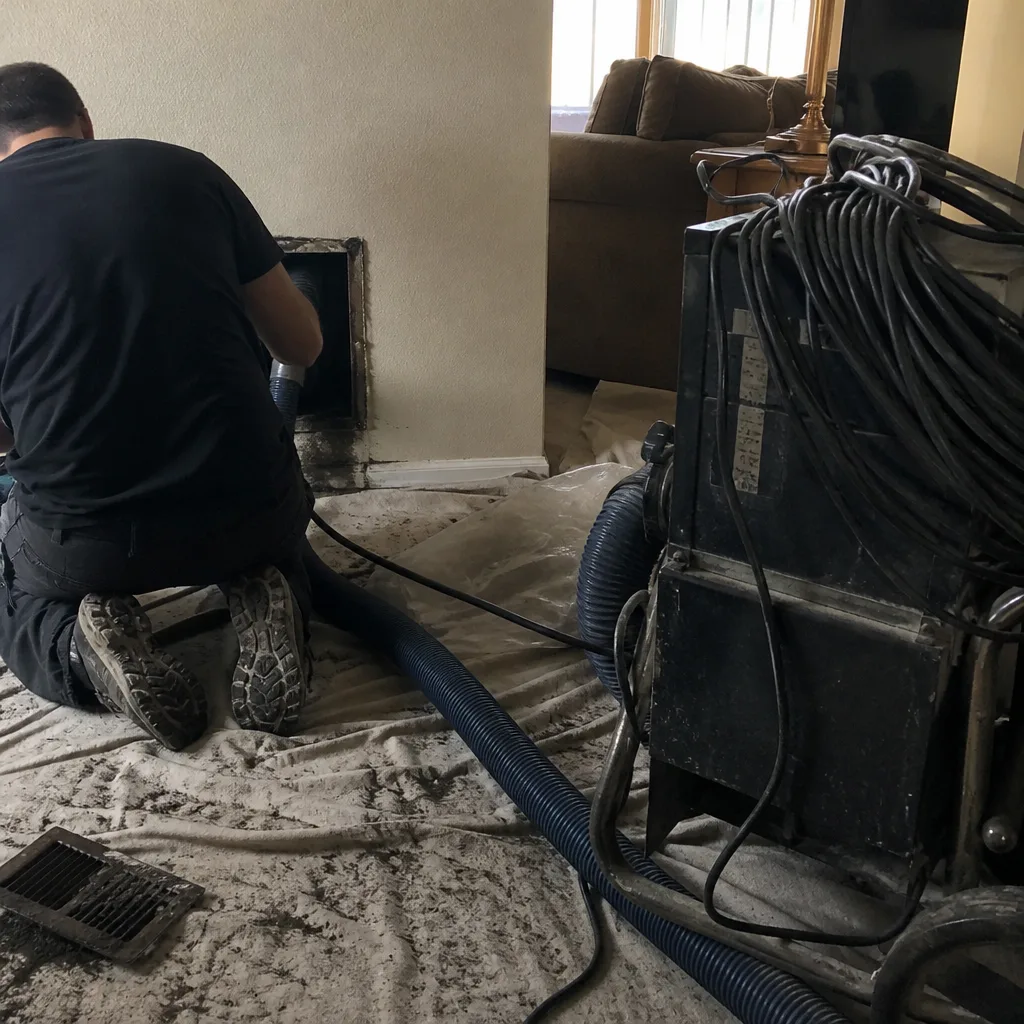 Before
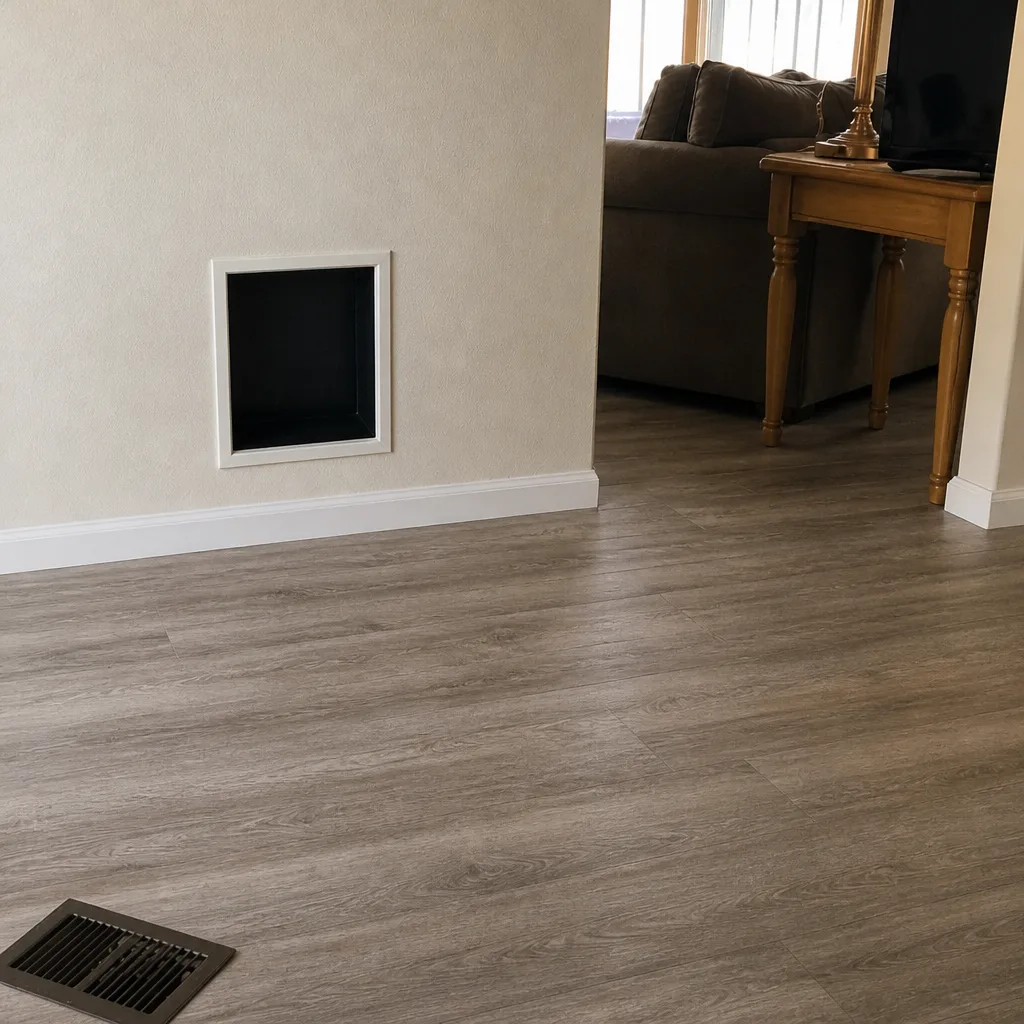 After
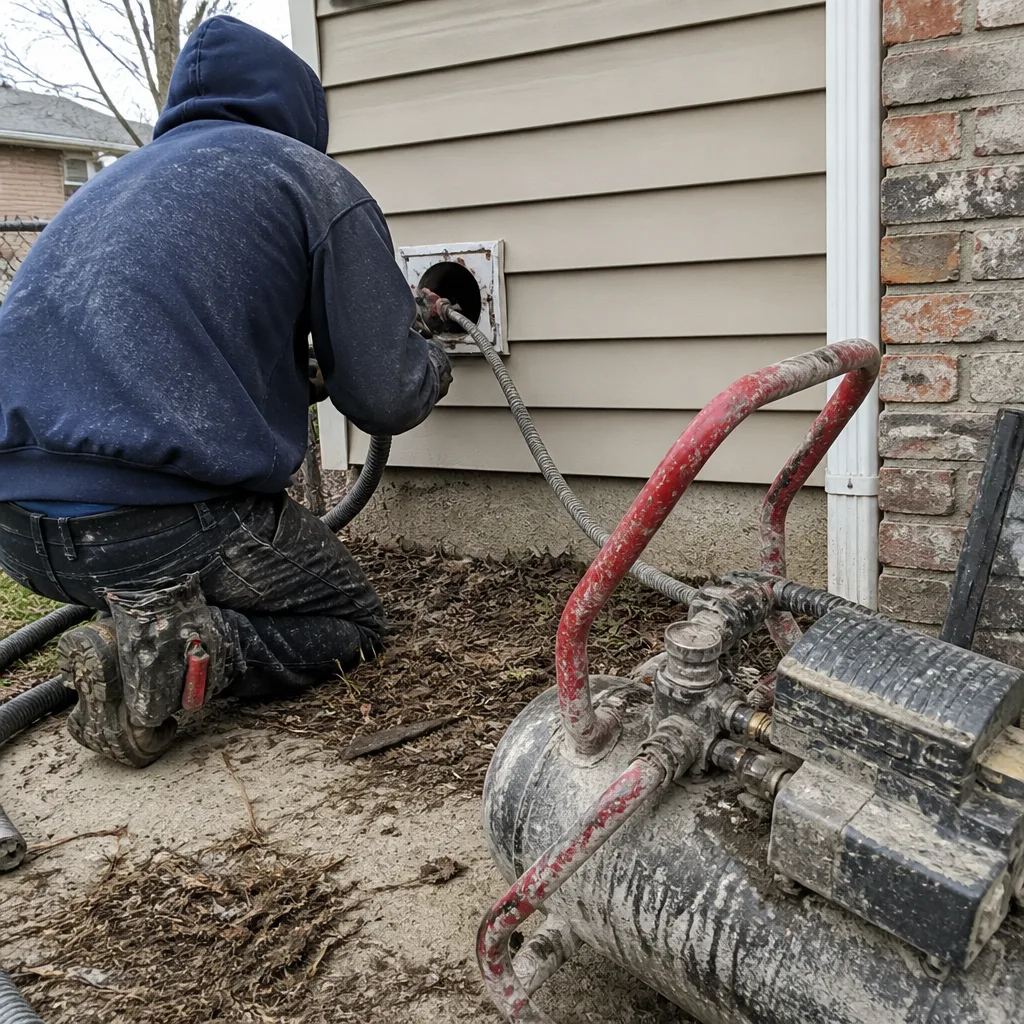 Before
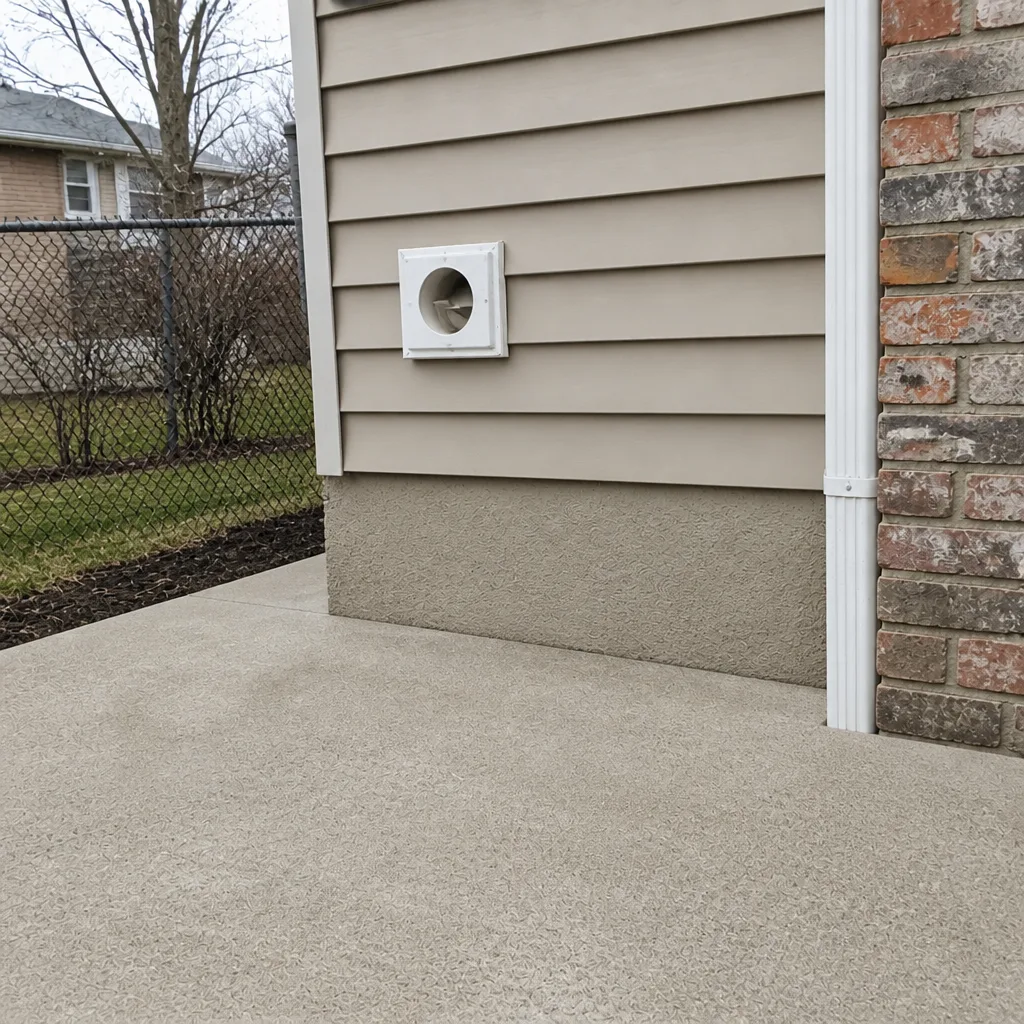 After
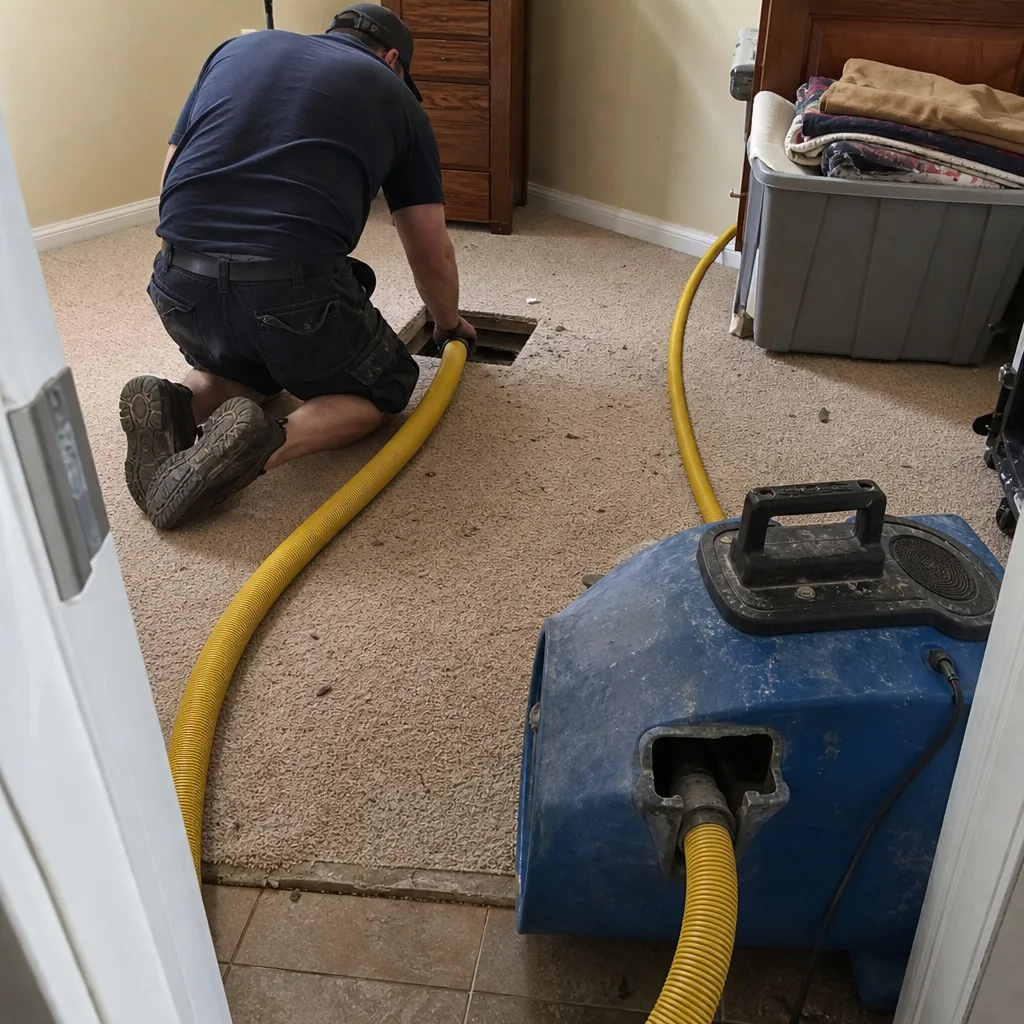 Before
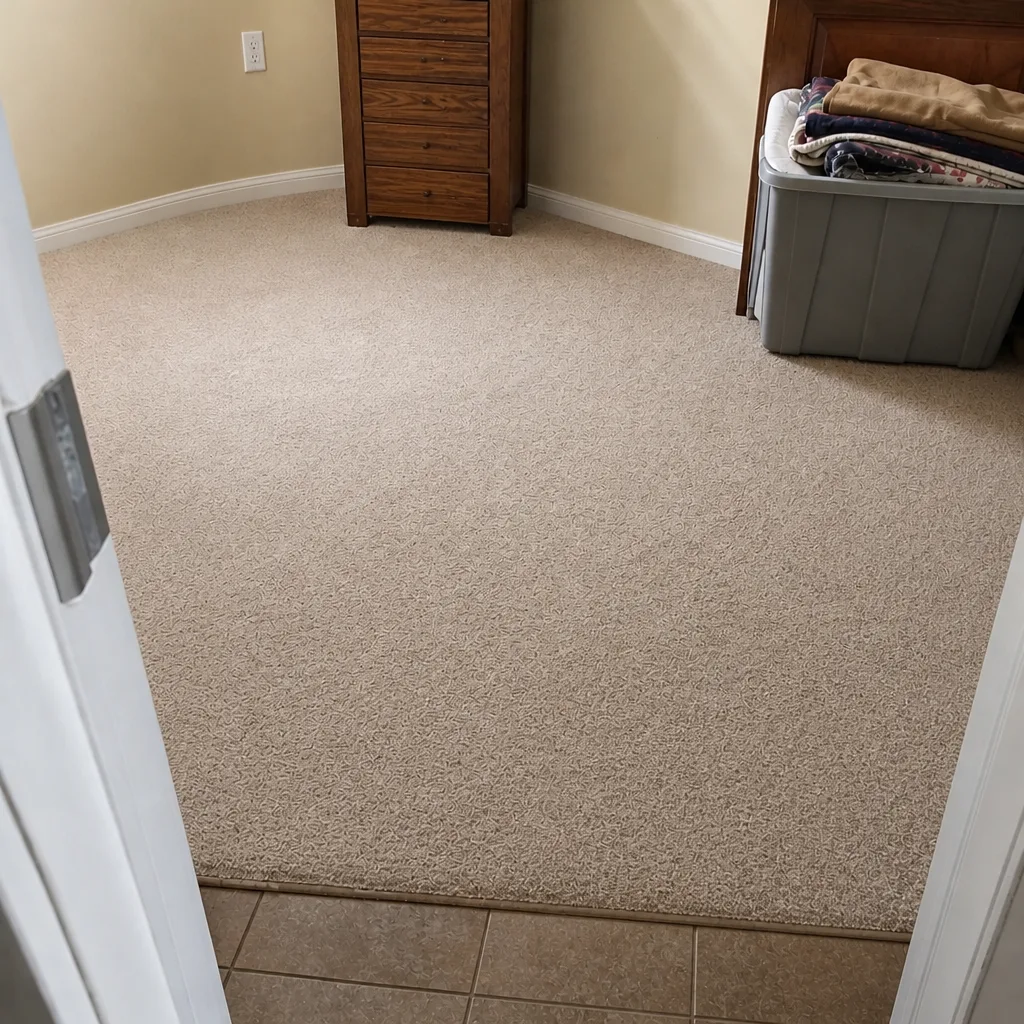 After
Common Mistakes to Avoid
- Assuming your filter is better than it is. A lot of Sandy homeowners discover their “high-efficiency” filter is a basic MERV 4 panel when they finally look at the cardboard sleeve. Check the rating before smoke season, not during it, and write the size down so replacements are easy.
- Running the HVAC with the windows open during smoke. This doesn’t air out the house; it draws more outdoor particulate into the return system and pushes it through every room. Close up the house and lean on filtration instead.
- Cleaning ductwork yourself with a shop vac and a brush kit. A shop vac doesn’t have the airflow to pull settled debris from a long duct run, and it can stir more into the airstream than it removes. That’s a good way to make an emergency worse, not better.
- Skipping the post-earthquake inspection because “it looks fine.” Flex duct separation and seal failures often aren’t visible from a register. Running the system on a damaged connection means pulling attic or crawlspace air into the living space until someone inspects it properly.
- Waiting past 72 hours on water intrusion. A damp duct interior is a biological growth environment. If water reached the ducts, the window for a straightforward cleaning closes fast, and the problem gets more involved after that. Call at the first sign of moisture, not at the first sign of mold.
- Treating a post-smoke smell as harmless. Persistent smoke odor from the vents is a signal that particulate has settled in the duct interior, and it won’t clear on its own. If it’s still there days after the outdoor air is clean, get it inspected.
- Choosing a cleaner on price alone. The lowest advertised rate often turns into a much larger invoice once work begins. A written estimate before any work starts, for the whole system, is the only price you can compare fairly.
When to Call a Professional
Some duct situations need a trained technician with professional equipment, not a homeowner with a flashlight. Call when you find visible separation at a flex connection after an earthquake, when water has reached the duct system within the past 72 hours, when smoke odor from the vents persists for days after outdoor air has cleared, or when you suspect your filter was bypassing or badly undersized during a heavy smoke event. Call if you’re seeing allergy symptoms that track with the HVAC running, or if the last cleaning was far enough back that you don’t actually know the condition of the duct interior. Sandy Air Duct Cleaning Pros offers free estimates in Sandy. Call (833) 858-9278. We answer 24/7, with fast dispatch from 7am to 7pm, Sunday through Friday.
Frequently Asked Questions
Install a MERV 13 filter, verify that it fits the filter slot without bypass, and keep a spare on hand before smoke season starts. Close your fresh-air intake during active smoke events and run the system fan continuously while filtering. If it’s been years since your ducts were inspected or cleaned, get that done before the season rather than during a smoke week. Our team at Sandy Air Duct Cleaning Pros can inspect your system and tell you exactly what state it’s in.
Check flex duct connections at the air handler, rigid duct joints in accessible attic and crawlspace runs, register boots, and the air handler’s mounting platform. Any separation, gap, or displaced equipment means the system shouldn’t run until it’s inspected and repaired. If you find damage, call (833) 858-9278; our duct repair and sealing service can fix leaks we find in the same visit as a cleaning. Estimates are free.
The critical window is 48 to 72 hours. After that, the risk of biological growth in the duct interior rises sharply and the job shifts from a cleaning to a cleaning plus sanitizing. Shut off the HVAC immediately if you suspect water intrusion, start drying, and get an inspection within the first two days. Call (833) 858-9278 to schedule one.
MERV 13 is the practical threshold for residential smoke filtration. It captures a meaningful share of sub-micron particulate while keeping static pressure within range for most residential blowers. Higher-MERV filters exist, but your equipment has to be rated for the airflow restriction they create. If you want to run high-efficiency filtration reliably, a filter cabinet upgrade from Honeywell or Aprilaire makes the fit work as intended.
Yes, in most cases, if the source is settled particulate in the duct system rather than smoke in soft furnishings or the building envelope. Professional cleaning with Rotobrush and Nikro equipment dislodges and captures what’s in the duct interior. If odor persists after cleaning, that’s a sign to look at other surfaces and materials, and our Air Quality & Sanitizing service addresses microbial and odor sources more deeply.
Ask for before-and-after photos of your own duct system, not stock images. A legitimate provider documents what they find and what they remove. The other indicator is a written estimate agreed before any work starts, for the whole system, rather than per-vent pricing or a coupon rate that grows once a technician is on site. We do both. Call (833) 858-9278 for an exact quote.
The Bottom Line
Emergency air quality preparedness in Sandy isn’t a product you buy or a one-time service. It’s a handful of habits: knowing what filter you actually have and keeping a spare MERV 13 on hand, understanding when to run your HVAC during smoke and when to shut it down, inspecting your ducts after an earthquake before you trust the system again, treating water in the ducts as a 48 to 72 hour clock, and having a trained technician’s number in the kit box. The Sandy Air Duct Cleaning Pros team brings professional-grade equipment, full-system coverage from the vent to the unit, and a cleaning-plus-repair capability that means the same visit can diagnose and fix what’s found. Call (833) 858-9278 for a free estimate. We answer 24/7. Fast dispatch from 7am to 7pm, Sunday through Friday.
Written by the team at Sandy Air Duct Cleaning Pros.