
How to Choose the Right Air Duct Cleaning Company in Sandy
Most homeowners in Sandy compare duct cleaners on the wrong things. They check the star rating, the coupon on the mailer, maybe whether the company claims NADCA membership, and then they book. None of that tells you whether the machine rolling into your driveway can hold negative pressure across a whole duct system instead of just at the hose end. That single capability is what separates a real cleaning from a vacuum waved at your registers, and it’s the question almost nobody asks. Ask it, and you’ll choose better than 90% of the market.
Why “negative pressure” is the only duct cleaning question that matters
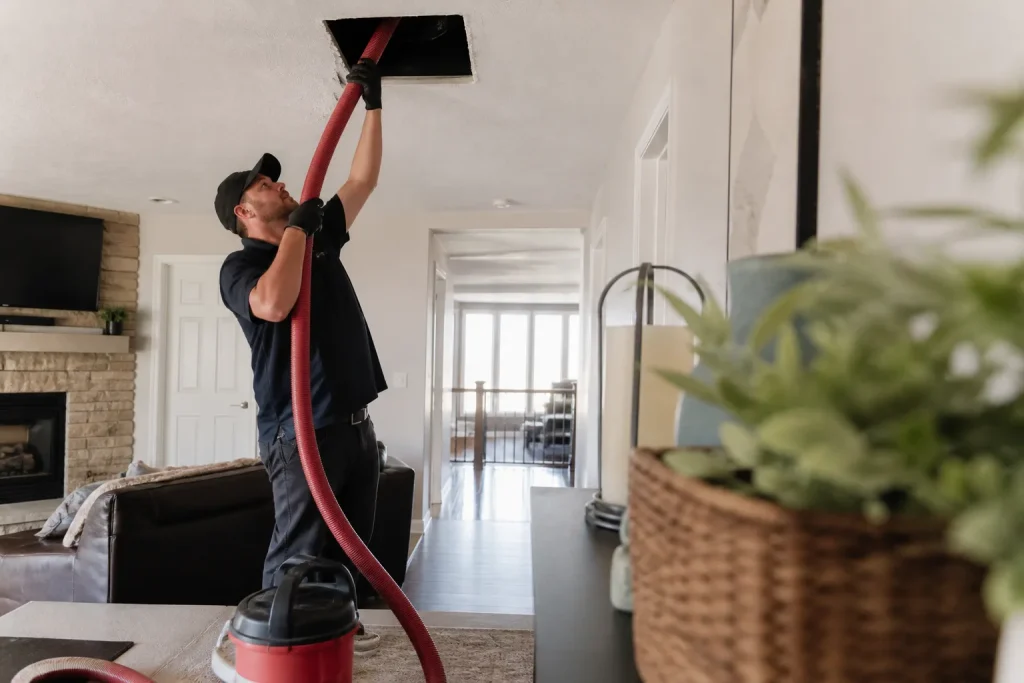
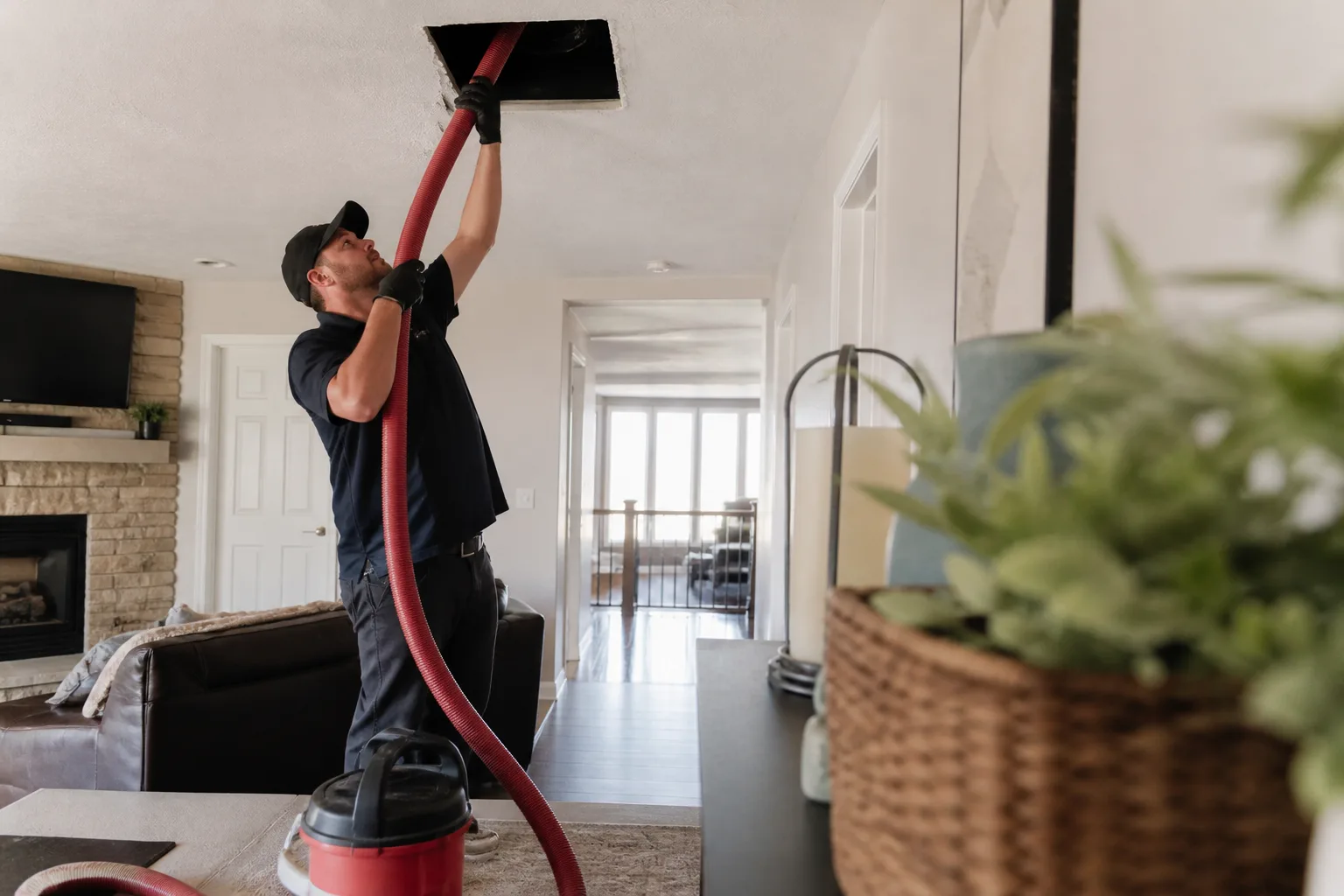
Here’s the principle in plain terms. A duct system in a typical Sandy home runs through unconditioned attic and crawl space, and every joint, seam, and boot leaks a little. If the cleaning equipment pulls less air than the system leaks in, you’re not removing debris, you’re stirring it. The dust that was sitting in a return chase ends up in the living room at dinnertime. Negative pressure means the vacuum is stronger than the leaks, so everything loosened inside the ducts travels toward the collection unit and stays there until it’s bagged.
We’ve seen jobs where a crew spent three hours with a shop-grade vacuum and left the house dustier than they found it. The homeowner paid, the technician left, and the ducts were essentially where they started.
What actually maintains negative pressure:
- A high-CFM vacuum with a HEPA or multi-stage filtration stack, connected at a main trunk or plenum rather than a single register.
- Sealed access points. Every cut you make into the ductwork has to be closed and taped while the vacuum runs, or the pressure bleeds out.
- Agitation that loosens debris without blowing it past the return. Rotary brush and compressed-air tools, run from the supply side, do this; a leaf-blower-style “duct cleaning” does not.
- Verified pressure at remote branches, not just at the machine. This is the detail that separates operators who understand airflow from operators who own a truck.
The one question to ask every contractor before you book
Ask this, word for word: “What CFM does your vacuum system pull, and how do you verify negative pressure at the remote duct branches?”
A credible answer names the equipment, gives a CFM figure you can look up, describes how the access points are sealed and where the vacuum is connected, and explains how the technician confirms flow at the far end of the system, typically with a gauge, a smoke test, or measured airflow before and after. A less credible answer is a long pause, then “we use a very powerful truck-mounted unit.” That pause is your answer.
A side note on the “truck-mounted unit” pitch. Truck-mounted vacuums can be excellent in the right setting, but in a Sandy home, the truck is often 60 feet from the air handler, and the hose run itself eats CFM before the air ever reaches the machine. Portable professional units placed near the plenum frequently outperform a long hose run, especially in houses with two systems. Ask where the vacuum connects, not just what it is.
How to verify the equipment a company claims to use
Every real duct cleaner claims professional equipment. Most of them are telling the truth; some are not, and the difference shows up in the specs.
Nikro and Rotobrush build the portable and rotary-brush systems used on residential jobs across the country. Look up the actual model number the company gives you and read its CFM and filtration ratings. Nikro’s negative-air machines are spec’d for containment and restoration work, which is a much higher bar than a residential cleaning. Rotobrush’s power-brush systems are designed for agitation and simultaneous extraction inside the duct, and their published specs list brush coverage and vacuum flow. If a contractor can’t name a model, ask them to text you a photo of the machine’s data plate. Nobody who owns professional equipment objects to that.
Abatement Technologies is worth understanding even for a homeowner, because their HEPA filtration and negative-air units are specified in commercial remediation work where containment has to be documented. A cleaner who brings that class of equipment to a residential job is telling you something about how they think about the process. When a Sandy crew shows up with an unmarked van and a shop vac, the question of CFM answers itself.
What NADCA certification does and doesn’t prove
NADCA (the National Air Duct Cleaners Association) is a real trade standard, and its ACR (Assessment, Cleaning, Restoration) process is the framework the better companies follow. Certification is genuinely worth looking for. It is not, however, a guarantee.
What it does: it confirms the company has met a training and exam standard, follows a documented cleaning protocol, and operates within industry guidelines for source removal. It also means the company has a written process you can ask to see. Ask for it, and read it. A certified company won’t blink.
What it doesn’t: it doesn’t verify each truck, each technician, or the CFM of the equipment on a specific job. A certified franchise operator in Sandy can still dispatch a van with the wrong unit if they’re busy. That’s not a knock on NADCA, it’s a reminder to use certification as the door you walk through, and the pressure question as the wall you check behind it.
Two other credentials to ask about: whether the local pro is licensed and insured as their state requires, and whether the technician on your job has completed source-removal training on the specific equipment in use. The company we work with confirms both.
Sandy-specific red flags to watch for
Utah’s Wasatch Front has a seasonal rhythm to duct cleaning demand. Late fall and early winter, and late spring when allergy season is in full swing, the call volume in Sandy jumps, and out-of-area companies rent short-term vehicles and mail zip-targeted postcards. That’s not automatically a scam, but it’s a reason to ask sharper questions than usual.
Signs a company isn’t the right fit:
- Zip-targeted postcards from an address you can’t verify. Reverse-search the company. If the mailing address is a P.O. box or a different state, ask where the crew is coming from and how they’re equipped.
- An unmarked van with no visible equipment brand. Not a dealbreaker on its own (many small operators use private vehicles), but combined with a vague answer on the CFM question, it’s a pattern.
- A quote built entirely around vents. Per-vent pricing ignores system size and airflow path. A 2,400-square-foot Sandy home with two air handlers isn’t priced like a 1,200-square-foot one, and a real quote reflects that.
- No before-and-after photos in their process. A crew that cleans a system properly can show you the inside of your own ducts. Ask.
- Sanitizing offered as an add-on with no product behind it. If they can’t name the product or the protocol, it’s not a stain they’re selling, it’s hope.
How to compare two legitimately good quotes
Two honest quotes for the same Sandy house can differ by 30 to 40 percent and both be fair. Compare these four items side by side, and the gap explains itself.
- Scope. Does the quote include supply and return ducts, the air handler and coil cabinet, the blower, and dryer vent? Full-system coverage is different work than “duct cleaning.”
- Access point count. A thorough job cuts and reseals a defined number of access points based on the duct layout. Ask how many, and how they close them.
- Containment method. What keeps dust out of the living space during the job? Negative pressure at the plenum, HEPA filtration on the exhaust, drop cloths and sealed registers. Ask what they do at the far end of the house.
- Post-job verification. What happens when they finish? Photos of the interior ductwork, a walk-through, a written summary of what was found. Ask what a customer receives.
When duct repair or sealing enters the picture, the question gets more interesting. Most cleaners clean and stop. If a technician finds a disconnected flex run in the attic or a leaking takeoff, a company that also does duct repair and sealing can fix it in the same visit instead of handing you a list. We clean, sanitize, and repair in one scope, because the seal is what keeps the cleaning relevant.
If you want a starting point, air duct cleaning is the service most Sandy homeowners begin with, and dryer vent cleaning is often bundled because the same equipment and the same technician are on site.
When to call a pro instead of waiting
If you’re seeing visible dust blowing from registers after your HVAC runs, smelling something musty in a bedroom that’s used less than the rest of the house, or noticing airflow that varies room to room with no obvious cause, it’s time for a professional assessment. The airflow-chain diagnosis matters more than the cleaning itself. A friend’s leaf blower story isn’t going to fix a disconnected duct.
For a full-system inspection that covers both the ducts and the HVAC cabinet, HVAC cleaning is the right starting point for most Sandy homes, and a full-system job typically addresses both in a single visit.
Related services in Sandy: air duct cleaning, dryer vent cleaning, HVAC cleaning, duct repair and sealing, and air sanitizing. Any one of them can start with a free estimate on the same call.
The Bottom Line
The best duct cleaning company in Sandy isn’t the one with the biggest ad or the loudest review count. It’s the one that can tell you what CFM their machine pulls, how they hold negative pressure at your far registers, what equipment brand and model they’re running, and what you’ll see when they’re done. NADCA certification is a good start. The answers to those four questions are where the truth lives. Compare quotes on scope, access points, containment, and verification, and pick the crew that treats all four as routine.
If you’re in Sandy and need help, Sandy Air Duct Cleaning Pros offers free estimates. We use Rotobrush and Nikro equipment on every job, with Abatement Technologies filtration for containment. Call (833) 858-9278 to set one up. We answer 24/7. Fast dispatch from 7am to 7pm, Sunday through Friday.
Frequently Asked Questions
Ask what CFM their vacuum system pulls and how they verify negative pressure at remote duct branches. A real professional will answer in detail and point you to the equipment model. A company that changes the subject or offers a discount instead hasn’t answered.
Most residential jobs in Sandy land in a range quoted per system after the company inspects the duct layout, the number of air handlers, and the access points needed. Per-vent quotes are a red flag because they ignore system complexity. Call (833) 858-9278 for an exact quote; estimates are free and the written estimate sets the final price.
No, but it’s a good first filter. NADCA certifies the company’s training and process, not the specific equipment unit that rolls into your driveway on a given day. Use it to narrow the field, then confirm the equipment and the containment method directly.
Ask for before-and-after photos of your own ducts, a walk-through at the end of the visit, and a written summary of any issues found (disconnected runs, leaks, damaged flex). We provide all three. A company that can’t show you the inside of your own ducts hasn’t proven anything.
Cheap quotes usually skip the equipment and containment steps that make cleaning effective: lower-CFM vacuums, fewer access points, no HEPA filtration, no resealing of the cut points. You’re paying for the same word on the invoice, but a different process behind it. A written estimate from a company that walks you through those steps will cost more and do more. Call (833) 858-9278 for a free quote.
Written by the team at Sandy Air Duct Cleaning Pros.
Need Air Duct Cleaning Help?
Call Sandy Air Duct Cleaning Pros - the local pro we connect you with is licensed and insured, with free written estimates in Sandy.
(833) 858-9278